Every December, Miami Art Week stages an argument about art and technology, and every December the argument is made by the most expensive machines in the room. This year the fair's digital sector, Zero 10, brings Studio DRIFT's Murmuring Minds, thirty autonomous robots that respond to visitors. It will be filmed a great deal. The better answer to the question it poses is a few blocks away, at The Bass, where Yuko Mohri has filled three galleries with fruit that is slowly dying, water that is meant to leak and a grand piano that plays whatever the sea tells it to.
Yuko Mohri: Unviolated Imperfection opened on September 17, 2026 and runs until May 30, 2027. It is the Tokyo-based artist's first solo exhibition in a US museum, organised by Jasa McKenzie, associate curator of The Bass, and funded by the John S. and James L. Knight Foundation's New Media Initiative. The title inverts Violated Perfection, Aaron Betsky's 1990 book on the fragmentation of modern architecture. Where Betsky read imperfection as damage, the museum says Mohri treats it as the condition that lets a system stay "responsive, adaptable, and alive."
Three rooms, three ways of letting go
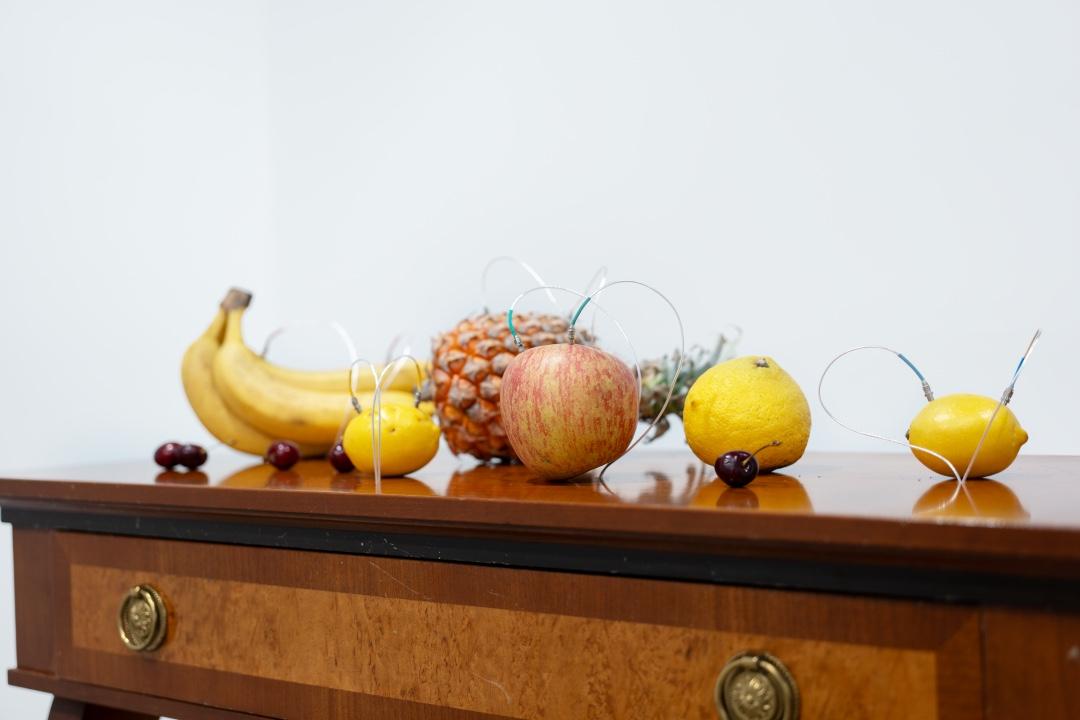
The first gallery holds Decomposition. A tableau of fruit common in South Florida sits on a table, with electrodes reading the changing moisture inside it. The signal becomes pitch through speakers and light on a pulsing LED screen. As the fruit rots, the music changes. The Bass names two sources: the 1970s synth duo Suicide, and Kusōzu, the Buddhist paintings of a body passing through nine stages of decay. It is a still life that cannot hold still, and a vanitas that sounds like a rehearsal room.
Next door is Moré Moré (Leaky), the series Mohri showed at the 2024 Venice Biennale, where she represented Japan with Compose, curated by Sook-Kyung Lee. It grew, as her gallery Tanya Bonakdar explains, out of her long fascination with the ad hoc fixes improvised for leaking ceilings in Tokyo's subway stations, the makeshift contraptions that catch water and send it somewhere harmless. Mohri builds the leak on purpose, then catches it with found objects, pumps and tubes in a closed loop. For Miami, the objects were bought secondhand in Miami. The museum adds Duchamp's readymades to the lineage, and the reference is earned: these are found things doing a job they were never made for, and doing it slightly badly.
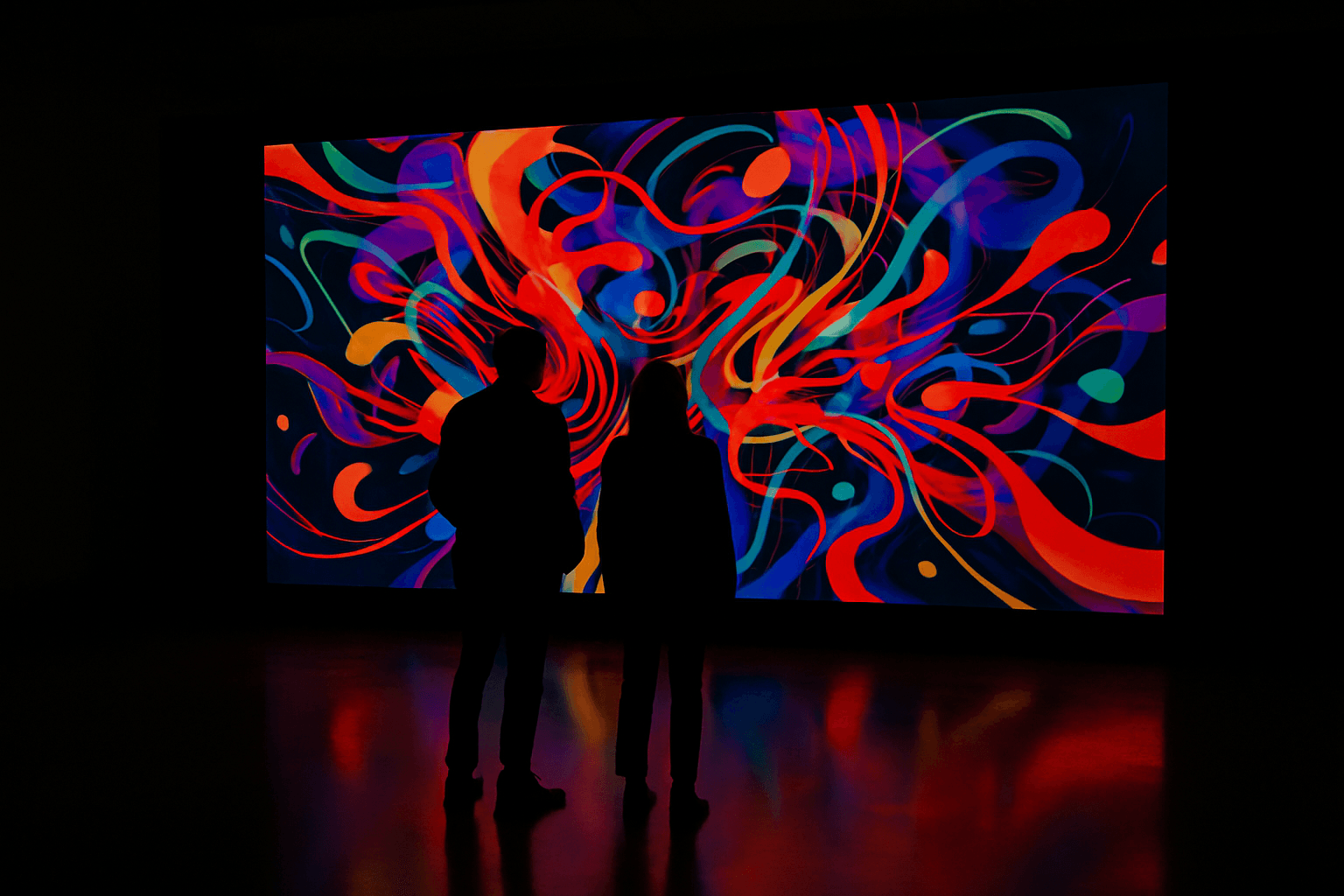
The largest gallery holds Piano Solo, a self-playing grand piano facing an LED screen of ocean footage filmed along both coasts of Miami Beach. Sound from the waves is translated into notes. The Bass invokes John Cage's Sonatas and Interludes for Prepared Piano; Mohri, quoted by the museum, calls herself a "de-composer."
Why this is the sharper technology show
The robot and the leak are both systems that respond to their environment. The difference is what they want from you. Murmuring Minds, like most spectacular technology art, is designed to work perfectly in front of an audience: the movement is the payoff, and the visitor's role is to trigger it and be impressed. Mohri's systems are designed to drift. The fruit will rot whether or not anyone is watching. The leak will find its own route. The piano will play the weather. Nothing in the room is calibrated for the visitor's pleasure, which is precisely why the attention it asks for is closer to the attention a painting asks for.
That is also the sharper critique of the technology we actually live with. The machines that organise ordinary life promise frictionless performance and hide their maintenance. Mohri's work is all maintenance. Her source is not Silicon Valley but a makeshift repair in a subway station, solving a problem nobody will ever fix properly. In a city that is itself an improvised negotiation with water, a show about living with the leak rather than eliminating it lands with uncomfortable precision.
Where it falls short
The risk in work like this is charm. Fruit wired to speakers is a delightful image, and the delight can do the thinking for you; versions of Decomposition have now been shown in Venice, New York and Miami, and the more often a gesture is repeated, the closer it comes to a signature effect. The Miami installation also depends on the museum keeping it imperfect for eight months, which is harder than it sounds. A leak that is fixed by an overcautious conservator, or fruit replaced too punctually, turns a living system back into a display. The show's argument will be decided less by its opening than by what the rooms look like in March.
Mohri's market position is strengthening alongside her institutional one: a first solo show with Tanya Bonakdar in New York in February, the 2025 Calder Prize, a 2025 survey at Pirelli HangarBicocca in Milan travelling to Centro Botín, and, according to the gallery, a solo exhibition at the Barbican in London to follow The Bass. Works sit in the Centre Pompidou, M+ and Miami's own Museum of Contemporary Art. The commercial question her work raises is a real one, and it is the same one Zero 10 is trying to answer from the other side: how do you own an artwork whose content is a process that changes and decays? A collector buying a Mohri buys instructions, a maintenance problem and a promise of imperfection.
What to take from it
Art Week will spend its energy on whether digital art can be sold. Mohri's show asks a better question: whether a machine can be made to pay attention to the world instead of to us. For that, take the detour from the Convention Center to Collins Park. The robots will still be there when you get back.
Exhibition dates, curator, funding, the Betsky reference, the description of the three installations and their sources, and Mohri's "de-composer" quote from The Bass and its 2026–27 season announcement (June 10, 2026). The origin of the Moré Moré series, the Venice Biennale presentation and its curator, the Calder Prize, solo exhibitions, the Barbican show and museum collections from Tanya Bonakdar Gallery. The Miami version's secondhand objects as reported by Miami Living. Studio DRIFT's Murmuring Minds at Zero 10 from Art Basel's announcement of November 19, 2026. Press image by Koshiro Shikine, courtesy the artist and Tanya Bonakdar Gallery, via The Bass. This is desk coverage.