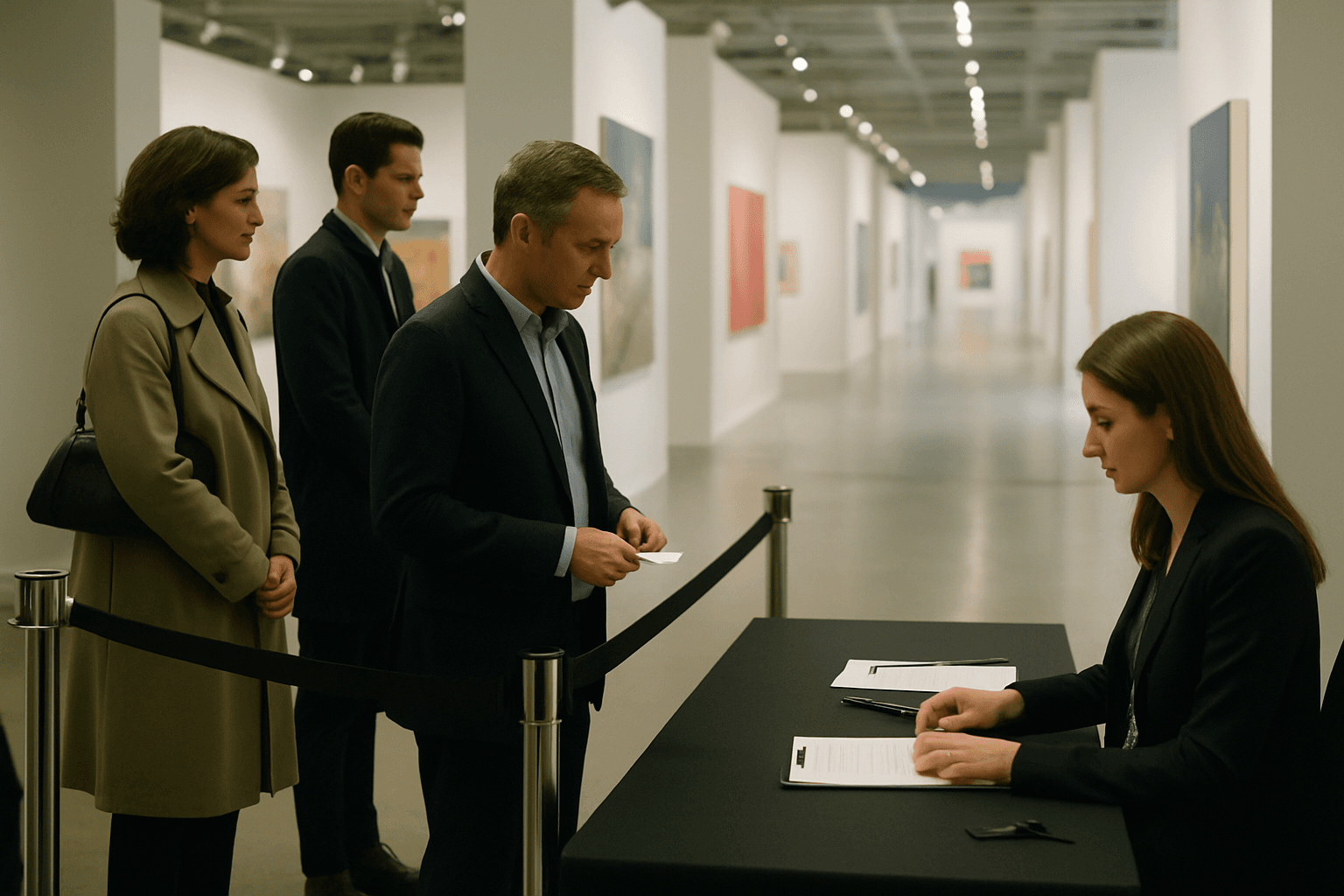
Art advisory is the least visible profession in this market and one of the most consequential. Advisors sit between collectors and everything else: galleries, auction specialists, private sales, the waiting lists that decide who is allowed to buy which artist.
The fee models are not secret:
- Commission, typically 5% to 20% of the purchase price.
- Retainer, usually annual and billed monthly, in the region of £1,500 to £10,000 per month depending on scope.
- Hourly, for consultations, collection reviews and market research where the collector wants guidance rather than transactions.
The retainer is the honest one and it is the least used
Look at what each model rewards.
A commission pays the advisor more when the client spends more, and pays nothing when the correct advice is to buy nothing. An advisor on commission who tells a collector to sit out a season has just worked for free.
A retainer pays for judgment regardless of activity. It is the only structure in which "do not buy this" is a service rather than a sacrifice, and it is the structure clients resist most, because paying a monthly fee in a quiet year feels like paying for nothing. It is precisely then that it is worth most.
Hourly is the model for people who do not really want an advisor, and it is often the right answer.
The rule that actually protects the collector
The professional convention is that the advisor should be paid from one side of the transaction only, and that all compensation is agreed in advance in writing.
That sounds like boilerplate. It is the whole thing. An advisor who takes a fee from the collector and also receives a commission from the gallery is not an advisor, they are a salesperson with a second invoice, and the collector cannot tell from the outside because the gallery side is never disclosed.
Nothing in this market prevents that arrangement. There is no licence to lose and no register to be struck off. The discipline is reputational, and reputation in a business this small travels slowly and quietly.
Why the role became structural
Because access stopped being purchasable. We wrote about how the preview day became the whole fair: the work that matters is committed before the doors open, to buyers a gallery already knows.
A collector without those relationships cannot fix the problem with money, only with somebody else's phone book. That is the actual product being sold, and it explains why the fee is charged on the purchase rather than on the hours: the value is not the research, it is being on the list.
It also explains the conflict. An advisor's usefulness depends on gallery relationships, and gallery relationships depend on being a reliable buyer. An advisor who repeatedly tells clients to pass becomes less useful to the galleries, and therefore, in time, to the clients.
What to watch
Whether any credible certification emerges. Several associations publish codes of conduct and none of them can enforce anything. Until the market has a register with teeth, the only protection a collector has is the sentence in the engagement letter about who else is paying, and the willingness to ask for it in writing.
Fee structures and the single-side compensation convention as described by Art Services Network and Cultured. Ranges are indicative and vary widely by market and scope.