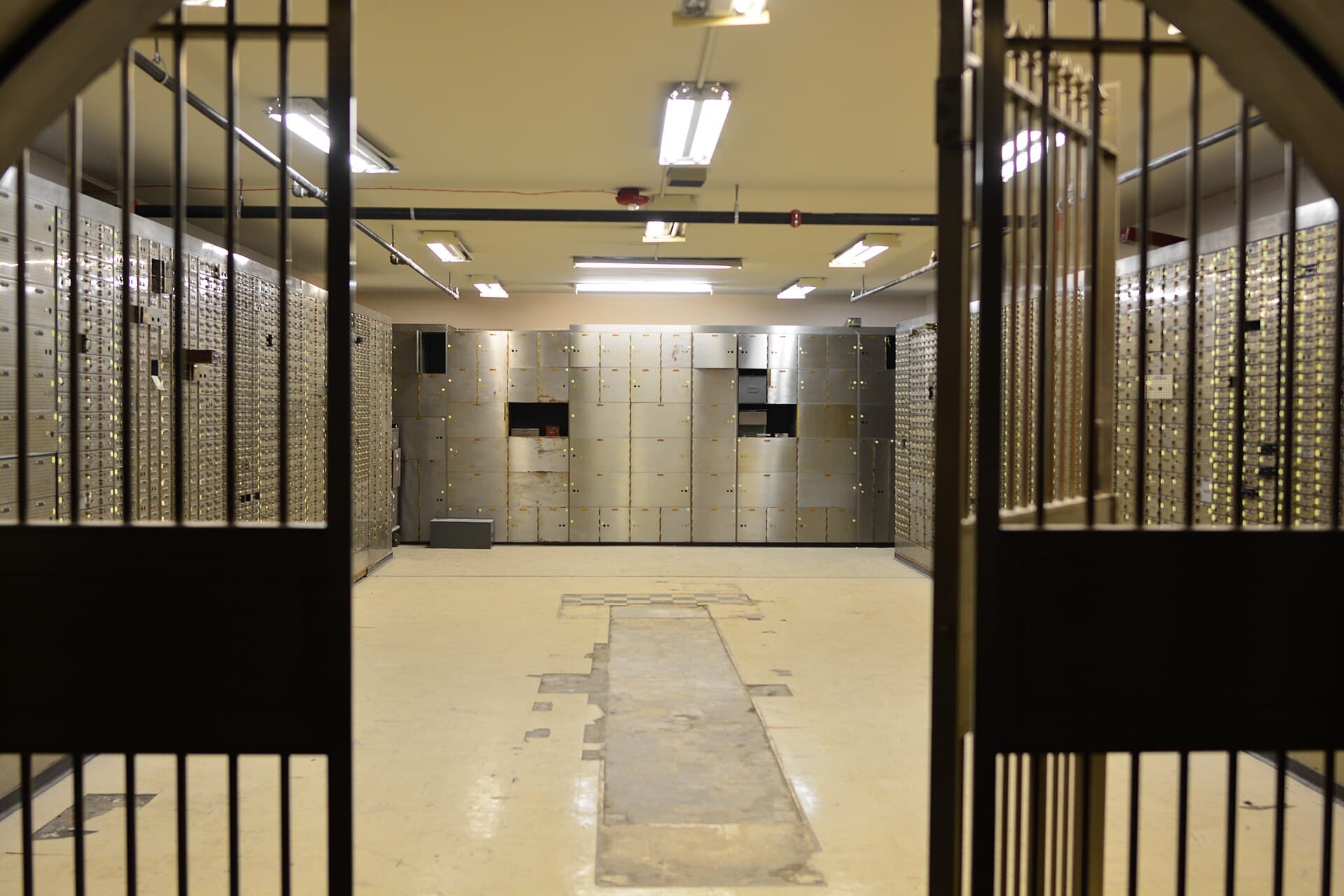
In January 2026, Sotheby's Financial Services completed a $900 million securitisation backed by loans against art and collectible cars. It was the largest transaction of its kind and it was significantly oversubscribed.
That last word is the news. Oversubscribed means the buyers of the paper wanted more of it than existed, which is a statement about how a category of debt is perceived rather than about how the art market is performing.
The size of the book
Estimates put the global art loan book at $28.7 to $33.3 billion in 2025, with forecasts of $33.9 to $40.0 billion for 2026 and $42.0 to $50.1 billion by 2027. The category is around $8 billion in 2015, so it has roughly quadrupled in a decade.
Standard terms are 50% to 60% loan-to-value against appraised value, through private banks and specialist lenders. The United States remains the largest market; growth is fastest in the United Kingdom and Europe.
Lending grew while the market did not
Set that against what the market itself did. We reported the art market growing 4% while online sales fell to a 2019 low, and a first half that rewarded a narrow band of material.
Art-secured lending grew faster than the market it lends against, and that combination is worth sitting with. It means the growth is not being driven by more art changing hands. It is being driven by owners extracting cash from art they are keeping.
What the borrowers say they are doing with it
48% of collectors using their collection as loan security say their main motivation is to finance the acquisition of more art.
Roughly half of this credit is therefore being recycled into the same asset class it is secured on. That structure has a name in every other market, and the polite version is that leverage is being used to build concentration in a single illiquid category.
It is not necessarily reckless. A 50% loan-to-value ratio is conservative, appraisals for lending are deliberately pessimistic, and a collector with real assets elsewhere is doing a sensible piece of balance-sheet management. But it does change what a sale means. When a work goes to auction, the question of whether it is being sold or being liquidated is no longer a matter of gossip, and it is not disclosed.
Why the securitisation matters more than the loan book
A loan sitting on a lender's balance sheet is a private arrangement between two parties with a shared interest in the collateral holding its value.
Securitised debt is different: it is priced by people with no relationship to the art, traded, and marked. It brings in capital that has no view on the market at all, and it introduces a price signal for art risk that comes from outside the art world.
Oversubscribed, in that context, means credit investors currently regard art collateral as underpriced risk. That is very good for liquidity and it is the point in every asset class's history at which the lending standards start to loosen.
What to watch
The loan-to-value ratios, not the volumes. As long as the market lends at 50%, a correction hurts owners and not lenders. If competition for this paper pushes advance rates toward 70%, the next soft patch stops being a story about taste and becomes a story about forced sellers.
Loan book estimates, growth figures and borrower motivations per the Deloitte Private and ArtTactic Art & Finance report and Art Basel. Market-size figures are estimates and ranges vary by source.