Art Basel announced on October 27 the exhibitors for the second Art Basel Qatar, which returns to the M7 and Doha Design District venues in Msheireb Downtown Doha from January 28 to 30, 2027, with Preview Days on January 26 and 27. The edition gathers 82 galleries from 37 countries and territories showing 80 single-artist presentations, all answering one theme, "between / بين", set by the Iraqi curator Wassan Al-Khudhairi with Vincenzo de Bellis, Art Basel's chief artistic officer and global director of fairs.
The gap between 82 galleries and 80 presentations is the format showing through: some artists are shared. Alfredo Spampinato, for one, appears on the list twice, with Gomide&Co and with Isla Flotante.
In February, reviewing the inaugural edition, we said the most interesting thing about Doha was the format, not the guest list. Eight months later the guest list has become the story, because a second edition is where a fair finds out whether the first one was curiosity or demand.
The list, read for absences
As reported by The Art Newspaper, 35 of last year's galleries, around 40%, are not returning. The names are not marginal: Hauser & Wirth, Pace, Gladstone, Almine Rech, kurimanzutto, Esther Schipper, David Kordansky and Victoria Miro, along with regional spaces such as Gallery Isabelle from Dubai and Cairo's Gallery Misr, which made its Art Basel debut in Doha. 30 galleries are new, among them Pilar Corrias, Silverlens and Isla Flotante.
One line from February now reads differently. On the opening day of the first edition, Victoria Miro's director Glenn Scott Wright told The Art Newspaper: "it's about who will return to the second edition. Lots of people come to the first edition out of curiosity and sometimes don't return." His gallery is one of the ones that did not.
De Bellis offers a structural explanation. "Across our global fairs, we see greater turnover in the sectors that are theme-led, and in Qatar that approach extends to the fair as a whole," he told The Art Newspaper. Selection follows how a gallery's proposed solo show answers the theme, so the list changes from year to year.
That is true, and it is also convenient. A curated fair does rotate its exhibitors more than a booth fair does, and a new theme will not suit every program. But a curatorial rationale explains why a gallery might be left out. It does not explain why the three or four dealers best placed to sell eight-figure work in a new market would all fail to fit "between" at once. Art Basel does not comment on individual applications, and we cannot say which of the absences were the fair's decision and which were the galleries'. What we can say is that the blue-chip tier which gave the first edition its weight is thinner this time.
Who stayed, and what they are bringing
The heavy end is still there, and its choices are telling. Acquavella brings Andy Warhol, Gagosian brings Maurizio Cattelan, Lisson brings Anish Kapoor, White Cube brings Park Seo-Bo, Sprüth Magers brings Rosemarie Trockel, Matthew Marks brings Ken Price, Tornabuoni brings Lucio Fontana, and the gallery list adds Frank Stella at Paula Cooper, Sonia Delaunay at Gió Marconi, Mira Schendel at Luxembourg + Co. and Enrico Castellani at Cardi.
That is a lot of established estate and secondary-market material for a fair whose curatorial line is about the region's place in the world. It reads like the lesson of February. As reported by The Art Newspaper, the first edition's biggest transactions waited on Qatar Museums, which had drawn up a shortlist of reservations before the preview, mainly for the collection of the Art Mill museum due in 2030. Galleries that bring museum-grade names with clear art-historical standing are bringing what that buyer has shown it will buy.
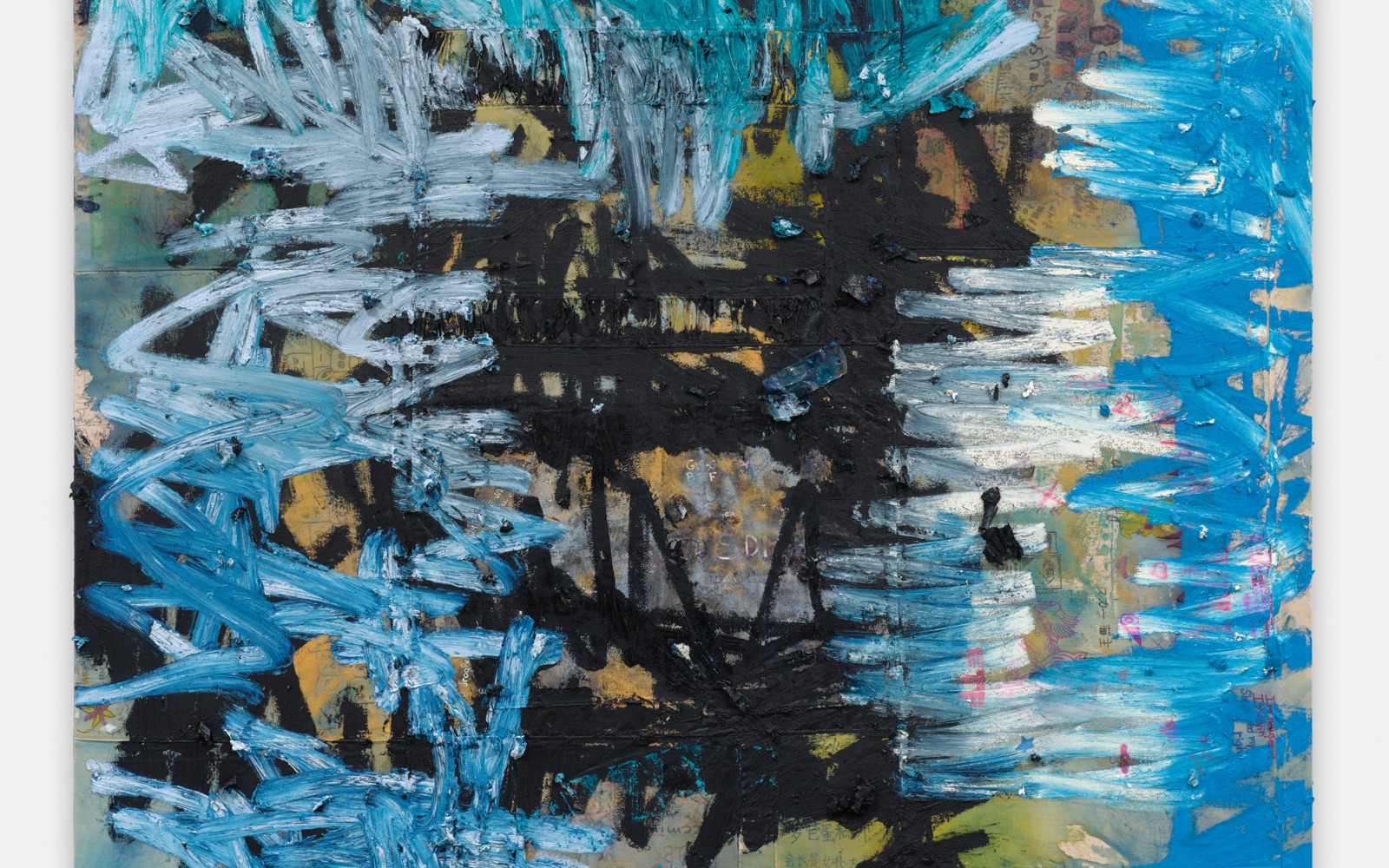
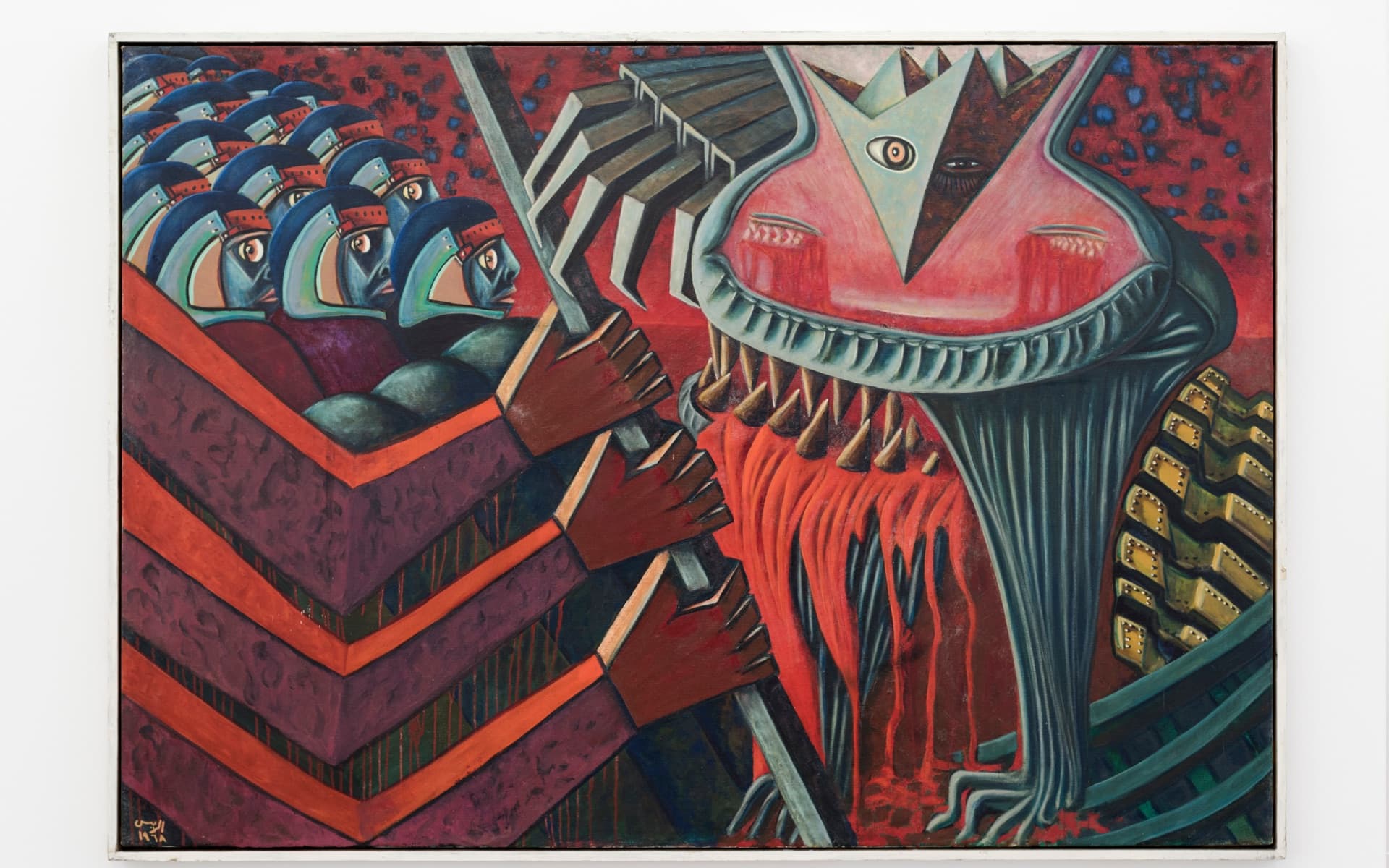
The more convincing half of the list is regional. Sfeir-Semler shows the Lebanese painter Aref El Rayess, whose Blood and Freedom canvas leads the fair's press images, and the selection reaches across generations: Mohammad Alfaraj with Athr, Seher Shah with Green Art Gallery, Vian Sora with The Third Line, Yazan Khalili with Lawrie Shabibi, Huda Lutfi with Gypsum, Monira Al Qadiri with Contemporary Art Platform, Chaïbia Talal with Le Violon Bleu and Faisal Samra with Hafez. Six homegrown galleries make their Art Basel debut, including Alhosh from Doha, Efie from Dubai and Dastan from Tehran and Toronto.
Al-Khudhairi knows this ground better than any curator Art Basel could have hired. She was the founding director of Doha's Mathaf: Arab Museum of Modern Art from 2007 to 2012, as reported by The Art Newspaper. Her theme, she says, is "a liminal space of possibility", and she wants the fair to present the region "not simply as a place in dialogue with the world, but as an active force in shaping global artistic discourse." It is a stronger brief than Wael Shawky's "Becoming", because it names an argument rather than a mood. Whether the stands make that argument, or simply place regional and Western names side by side and call it dialogue, is what we will be looking for in January.
One small inconsistency is worth flagging. Art Basel's release says "approximately 50 percent" of the artists come from the MENASA region, and a few paragraphs later calls them "a significant majority". Both cannot be true. Half is a perfectly good number for a fair that wants to be of its place and still sell to the world. It does not need to be inflated.
Paying down the risk
The clearest signal in the announcement is not on the gallery list. It is in the terms. As reported by The Art Newspaper, Art Basel's partnership with Qatar Sports Investments and QC+, the commercial arm of Qatar Museums, already covers customs, in-country transport, storage, installation, hotel rooms for up to two staff and the travel of exhibiting artists. From 2027 the fair will also pay 50% of the return shipping on unsold works, up to $20,000 per gallery.
Last February, participation cost exhibitors $15,000 to $25,000, as reported by The Art Newspaper, a fraction of any other Art Basel fair. Underwriting the journey home of what does not sell is a new kind of subsidy: it insures galleries against the outcome the fair most needs to avoid. It is generous, and it is also an admission. A fair confident in its buyers does not pay for the crates that come back.
Then there is the region itself. In late February, a few weeks after the first edition closed, Iran fired missiles into Qatar, injuring 16 people according to Qatari authorities, as reported by The Art Newspaper, which also notes renewed strikes in neighbouring Saudi Arabia this month. Exhibitors have been offered a refund or a deferral to the January 2028 edition if the fair is postponed or significantly altered. We would be surprised if none of those 35 absences began with an insurance quote, though no gallery has said so.
Building the buyer
The most honest part of the announcement is the smallest. Art Basel is launching a year-round program in Qatar, and its centre is the Collectors Majlis: an invitation-only pilot for around 30 to 40 new, emerging and art-adjacent collectors, with masterclasses before the fair, sessions during it and a salon afterwards. The faculty includes Sheikha Al-Mayassa bint Hamad bin Khalifa Al Thani, chairperson of Qatar Museums, the collector Tariq Al Jaidah and Art Basel's own leadership.
Thirty to forty people is not a market. It is a seminar. But it is the right size for what the fair actually lacks. In February we called the Doha edition "the trade finding out whether that is a market or a construction project." The second edition answers part of the question: Art Basel now treats it openly as construction, and is teaching the future buyers how a fair works while paying galleries to keep coming.
That is not a criticism. Most durable art markets were built by institutions before they were sustained by private collectors, and Qatar has spent two decades building the institutions. The risk is the one Glenn Scott Wright named in February, only now on the buyer's side. A fair can pay galleries to come back. It cannot pay collectors to.
We will be watching three things in Doha in January: how many of the shortlisted works go to Qatar Museums again, whether the regional galleries sell to private buyers from the Gulf rather than only to institutions, and whether the solo stands under "between" make an argument or only a hang. The circuit before then runs through Miami Beach in December, the fair that has least to prove and, after the Paris closure, the most to explain about its public days.
Dates, gallery and artist figures and quotations from Noah Horowitz, Vincenzo de Bellis and Wassan Al-Khudhairi from Art Basel's announcement of October 27, 2026, and its 2027 exhibitor list. Non-returning galleries, exhibitor support terms, contingency arrangements and De Bellis's comment on turnover as reported by The Art Newspaper. 2026 participation costs, Qatar Museums reservations and Glenn Scott Wright's remarks as reported by The Art Newspaper.