The main tent gets the Warhol. The satellites tell you whether the market is actually working.
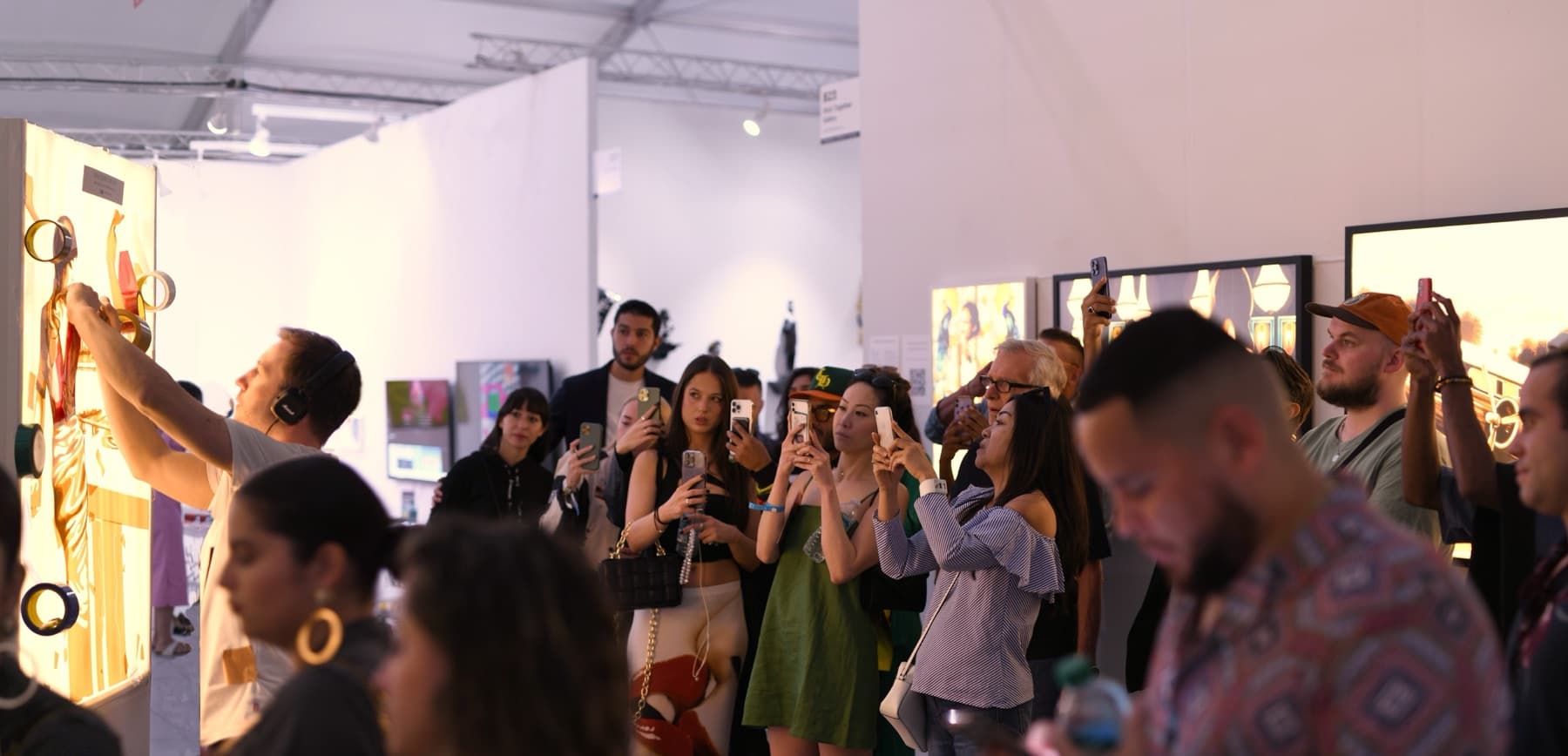
Miami Art Week 2025 ran its emerging and mid-market program across two anchors. NADA Miami returned to Ice Palace Studios from December 2 to 6 for its 23rd edition, with nearly 140 galleries, art spaces and nonprofit organizations from 30 countries and 65 cities. The exhibitor list counted 58 NADA members and 47 first-time participants. Untitled Art, Miami Beach ran December 3 to 7 for its 14th edition, with 157 exhibitors from 29 countries and more than 70 cities.
Both reported steady selling. At NADA, dealers described consistent movement especially below $20,000, and Artnet reported strong early sales from the Tuesday opening onward. ARTnews found the same pattern across both fairs: an emerging and mid-tier rebound that had been absent from the previous two Decembers.
Why the sub-$20,000 line is the one to watch
The top of the market can recover on its own. A collector who wants a Richter competes with four other people who want the same Richter, and scarcity does the rest. That kind of recovery says something about supply and very little about demand.
The market below $20,000 has no scarcity story. Nobody buys a $12,000 painting by an artist with three institutional shows because they cannot find one elsewhere. They buy it because they want it and because they feel able to. That makes the emerging end a much cleaner reading of confidence, and it is the segment that decides whether a young gallery makes rent.
So the useful fact from Miami 2025 is not the $18 million Warhol at the main fair. It is that dealers at NADA reported the sub-$20,000 tier moving consistently, in a week when several of them had budgeted for it not to.
Untitled's curatorial bet
Untitled used its 14th edition to push harder on curation than on scale. The fair introduced a Guest Curators Program, with Petra Cortright overseeing the inaugural Artist Spotlight, Allison Glenn leading Special Projects, and Jonny Tanna with Harlesden High Street curating an expanded Nest sector.
That is a specific strategic choice. A satellite fair competing on exhibitor count against a 283-gallery main fair loses. A satellite fair competing on which artists get framed, and by whom, is playing a game the main fair structurally cannot play, because Art Basel's selection committee answers to its member galleries and a guest curator answers to nobody.
Whitewall's read on the week described the mood as calmer and smarter than in previous years, which matches what the sales pattern suggests: fewer speculative buyers, more people who had decided in advance what they were looking for.
The pressure on NADA
One structural note that will matter in 2026. ARTnews reported through the autumn that NADA appeared to be losing exhibitors to other Miami fairs, including the main fair and Untitled.
That is the permanent tension in the satellite model. NADA's function is to incubate galleries that are too young, too small, or too odd for the main fair. It does that job well enough that its best exhibitors graduate, at which point they take their program to a fair with more buyers and NADA has to find the next cohort. Success and attrition are the same event viewed from different sides.
The 47 first-time participants in the 2025 edition suggest the pipeline is still filling. Whether it fills faster than the graduates leave is the question for the next few editions, and it is a better proxy for the health of the gallery ecosystem than any figure the main fair will publish.
Exhibitor counts as announced by NADA and Untitled Art. Sales characterizations are drawn from dealer reporting collected by Artnet and ARTnews during the fair.