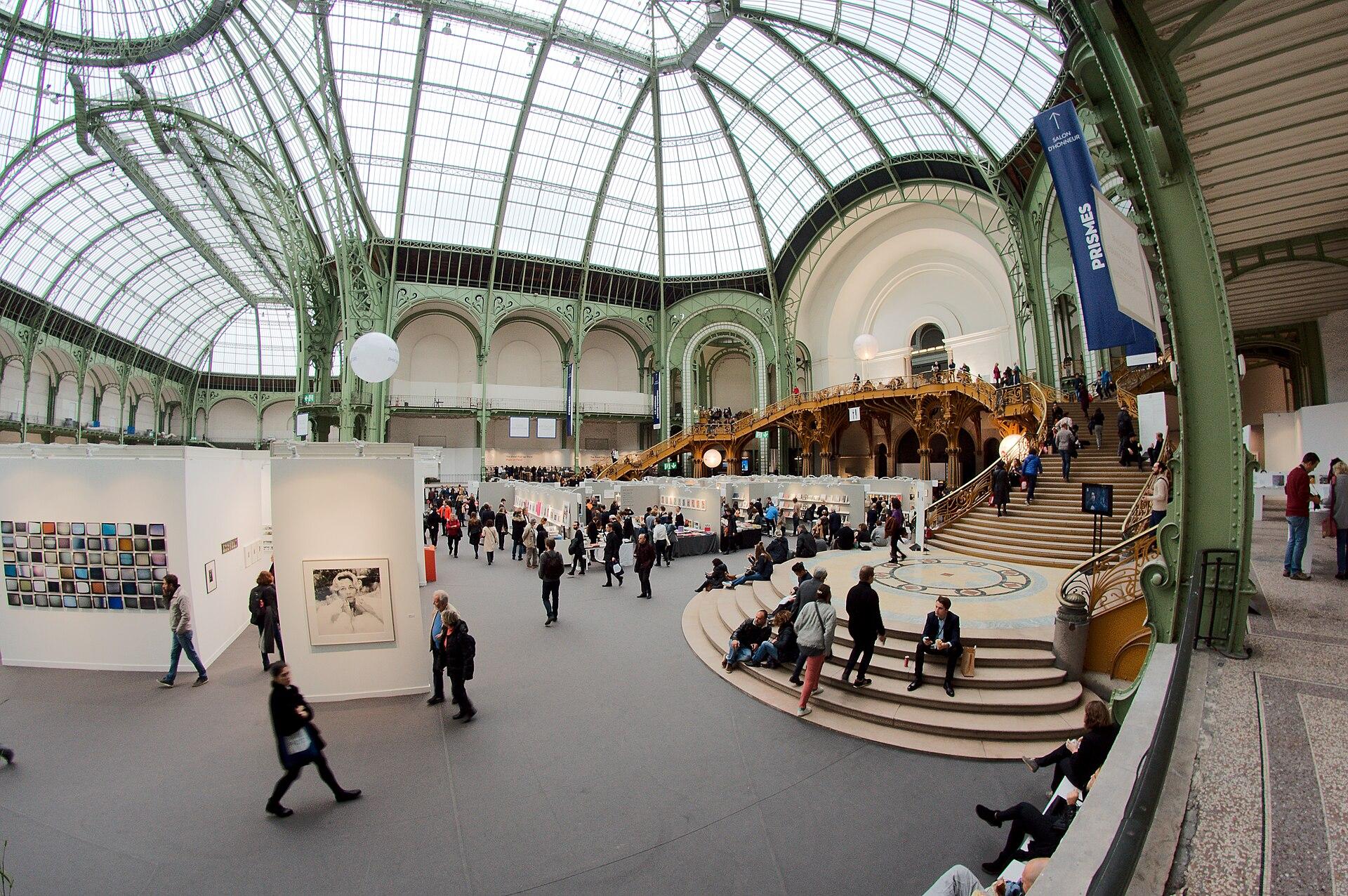
Three weeks after Art Basel Paris closed early, the Grand Palais changes medium. Paris Photo, the largest fair dedicated to the photograph, opens its 29th edition in the nave on November 12 and runs to November 15. According to the fair, the main sector brings together 152 galleries from 32 countries. Across all sectors the count is 199 galleries from 38 countries, as reported by Christine Coste in Le Journal des Arts.
The fair has given itself a frame that no other event in the calendar can claim this year: the Bicentenary of photography, counted from the first images fixed by Nicéphore Niépce in the 1820s. "Paris Photo will be the first international event celebrating the Bicentenary of photography," director Florence Bourgeois says in the fair's own interview with artistic director Anna Planas. Planas describes a route through the nave that covers "two hundred years of photography", from the nineteenth century to now.
An anniversary that suits the dealers
It is a good theme, and a convenient one. The nineteenth and early twentieth century section is stronger than in recent editions, as reported by Le Journal des Arts, and the Bicentenary gives those dealers a reason to be at the front of the room rather than at its edges. Hans P. Kraus Jr. brings Daguerre, William Henry Fox Talbot, Anna Atkins and Joseph-Philibert Girault de Prangey. Christophe Gaillard answers the history with Isabelle Le Minh, an artist who works on the history of the medium itself. The Centre Pompidou shows around 100 works by 30 artists from its collection, including acquisitions made for the anniversary.
The strongest gesture is at the entrance. In the Prismes sector, five galleries (David Zwirner, Konrad Fischer, Lia Rumma, MAI 36 and Sprüth Magers) have joined to give Thomas Ruff a retrospective on a 36-metre wall at the mouth of the nave. Five dealers who compete for the same collectors sharing one artist's wall is a statement about Ruff's standing. It is also the most efficient way to fill the most expensive metres of the fair.
Our doubt is with the frame, not the wall. Anniversaries tend to flatten a fair into a timeline, and a timeline favours the work everybody already agrees on. The best part of Paris Photo in recent years has been where it argues with that consensus.
Where the fair argues
That argument now sits in Voices, in its third edition, curated this year by Zasha Colah and Francesco Zanot under the title The Disappearance. Fourteen exhibitors take part, among them Léonard Pongo with Kristof De Clercq, Ulay with Charim, Dionne Lee with Petra Bibeau and Zanele Muholi with Southern Guild. A Digital sector is curated by Marco de Mutiis, and the main sector carries solo presentations that are worth the walk on their own: Stanley Kubrick's photographs from the 1950s at Duncan Miller, Merry Alpern's Dirty Windows at Miranda, Kati Horna at Proyectos Monclova, and Miguel Ángel Rojas at La Cometa.
If the Bicentenary is the fair's public face, these are its real test. A photography fair that sells only the canon becomes an auction preview with walls.
A market under strain
The trade does not hide its mood. Le Journal des Arts describes a market "even gloomier than last year", weighed down by the international situation. More galleries have asked for small stands, and more stands are shared between two galleries. Prices at the fair mostly sit between €1,200 and €20,000, with an Anna Atkins cyanotype at $40,000 among the examples cited, as reported by Le Journal des Arts.
That price band is the point. Paris Photo is not a fair where a single painting at $100 million sits on the wall, as one did across the same nave last month. It lives on hundreds of sales in four and five figures, which makes it a more honest reading of collector confidence than any evening sale. If shared stands and smaller booths still sell through, the photograph market is narrow but alive. If they do not, the Bicentenary will have been a celebration of the past by a market that is worried about its present.
The week has a second barometer across town. Christie's is showing 350 photographs from the collection of Roger Thérond, the former editor of Paris Match, from November 6 to 13, led by Gustave Le Gray's Marine, bateau quittant le port (1856 to 1857) at an estimate of €500,000 to €700,000 and Man Ray's Du Baiser (around 1930) at €250,000 to €350,000, as reported by Le Journal des Arts. A single-owner collection with this kind of provenance is exactly what has been clearing in every category this autumn. If the Le Gray falls short, the problem is the medium. If it sells and the fair stalls, the problem is the middle.
What to watch
The share of stands that are split between galleries, and whether dealers report sales in the first two days or only in the last. Whether Voices, rather than the anniversary, is where the reviews go. And the Thérond result, as the clearest read on what the very top of the photograph market will pay this year.
Edition, dates, venue, main sector count, sectors, the Ruff wall, the Prismes and Bicentenary presentations, Voices and Digital curators and exhibitors from Paris Photo and its main sector and Voices pages. Quotes from Florence Bourgeois and Anna Planas from the fair's interview. Total gallery and country count, market mood, shared and smaller stands, the 19th-century section, price range, the Atkins price and the Thérond collection, its dates and estimates as reported by Christine Coste in Le Journal des Arts (October 27, 2026; our translation). Interpretation is ours.