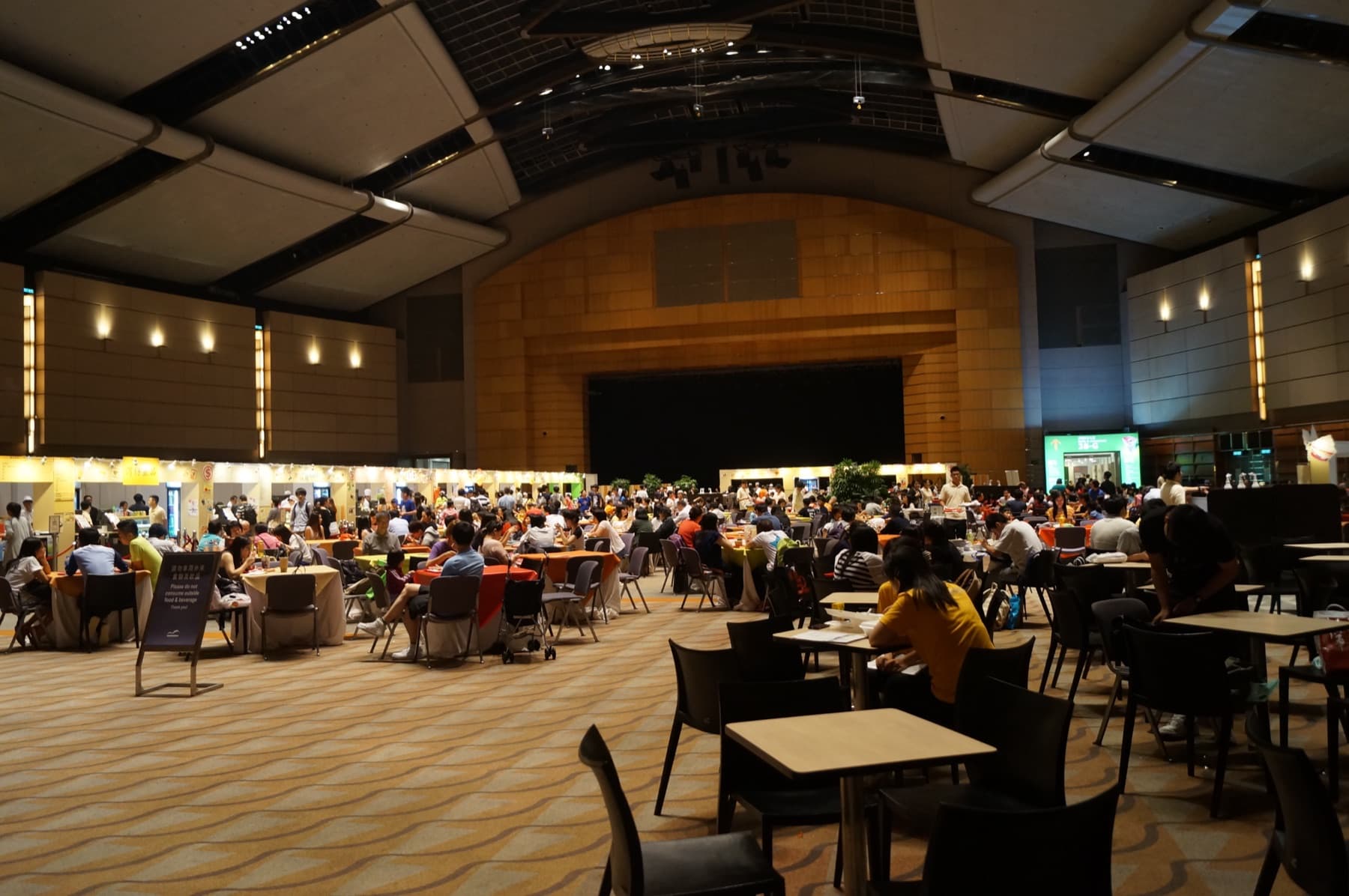
Art Basel Hong Kong closed its thirteenth edition on March 29 at the Hong Kong Convention and Exhibition Centre, after preview days on March 25 and 26. The fair gathered 240 galleries from 41 countries and territories and drew more than 91,500 visitors across its five-day run.
The number that matters is smaller and sharper: galleries reported twelve seven-figure transactions, nine of them during the previews, surpassing the total recorded across the entire 2025 edition.
The preview is the fair
Nine of twelve. Written down plainly, that means three quarters of the fair's top-end business was concluded before the doors opened to the general public, and that the public days functioned as a very large, very well-attended shop window.
This is now the pattern across Art Basel's editions rather than a Hong Kong peculiarity. Paris introduced Avant-Première in October 2025, where a $23 million Richter sold before the fair properly opened. Basel introduced Basel Exclusive in June, with more than 190 galleries reserving significant works for the preview opening. We treated the mechanics and the consequences separately in the preview-day hierarchy.
What sold
David Zwirner led the reported sheet: a 2006 painting by Liu Ye at $3.8 million, a 2002 canvas by Marlene Dumas at $3.5 million, and a work by Michaël Borremans at $1.1 million.
Underneath that, the more informative sales were smaller. Ink Studio reported placing more than nineteen works, including several by Bingyi in the $60,000 to $70,000 range and a Li Huasheng ink-on-paper work at $95,000.
A single gallery moving nineteen works in the $60,000 to $95,000 band says more about a market's health than one $3.8 million placement does. It means depth: multiple buyers, repeat decisions, a category with an active middle rather than a thin top.
A deepening Asian buyer base
The Art Newspaper's reading was that the sales reflected a deepening Asian market rather than a recovery of international traffic into the city. The fair also saw an increased presence of galleries from second-tier Chinese cities, several of them given prime booth locations.
That is a deliberate curatorial and commercial choice. Prime placement is the scarcest thing a fair controls, and spending it on newer mainland galleries rather than on established international names is a bet that the buyer base being served is regional and growing.
The exclusivity agreement
Alongside the edition, Art Basel and the Hong Kong government confirmed a five-year contract guaranteeing the fair's exclusivity to the city within the region.
This is the part with the longest tail. It removes the possibility of a competing Art Basel edition elsewhere in the region for five years, at exactly the moment when Art Basel is expanding into the Gulf with its Doha edition and when several Asian cities have been openly courting a major fair.
For Hong Kong, it buys certainty. For Art Basel, it converts a market position into a contract. For galleries in Seoul, Singapore, Tokyo and Shanghai, it settles a question that had been open: for the rest of the decade, the regional fair to be in is this one.
Figures as reported by Art Basel, with sales cross-checked against Artsy, Artlyst and The Art Newspaper.