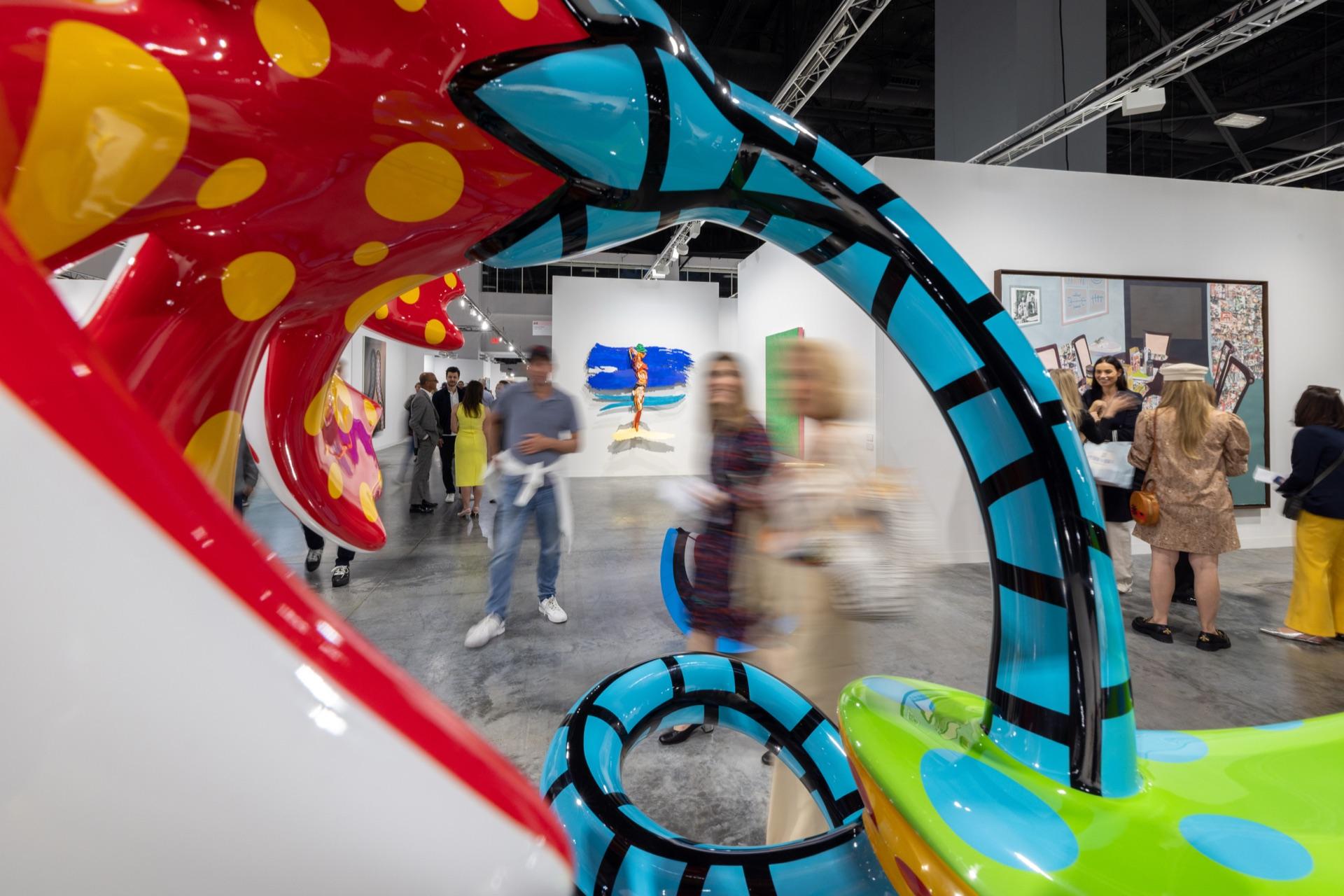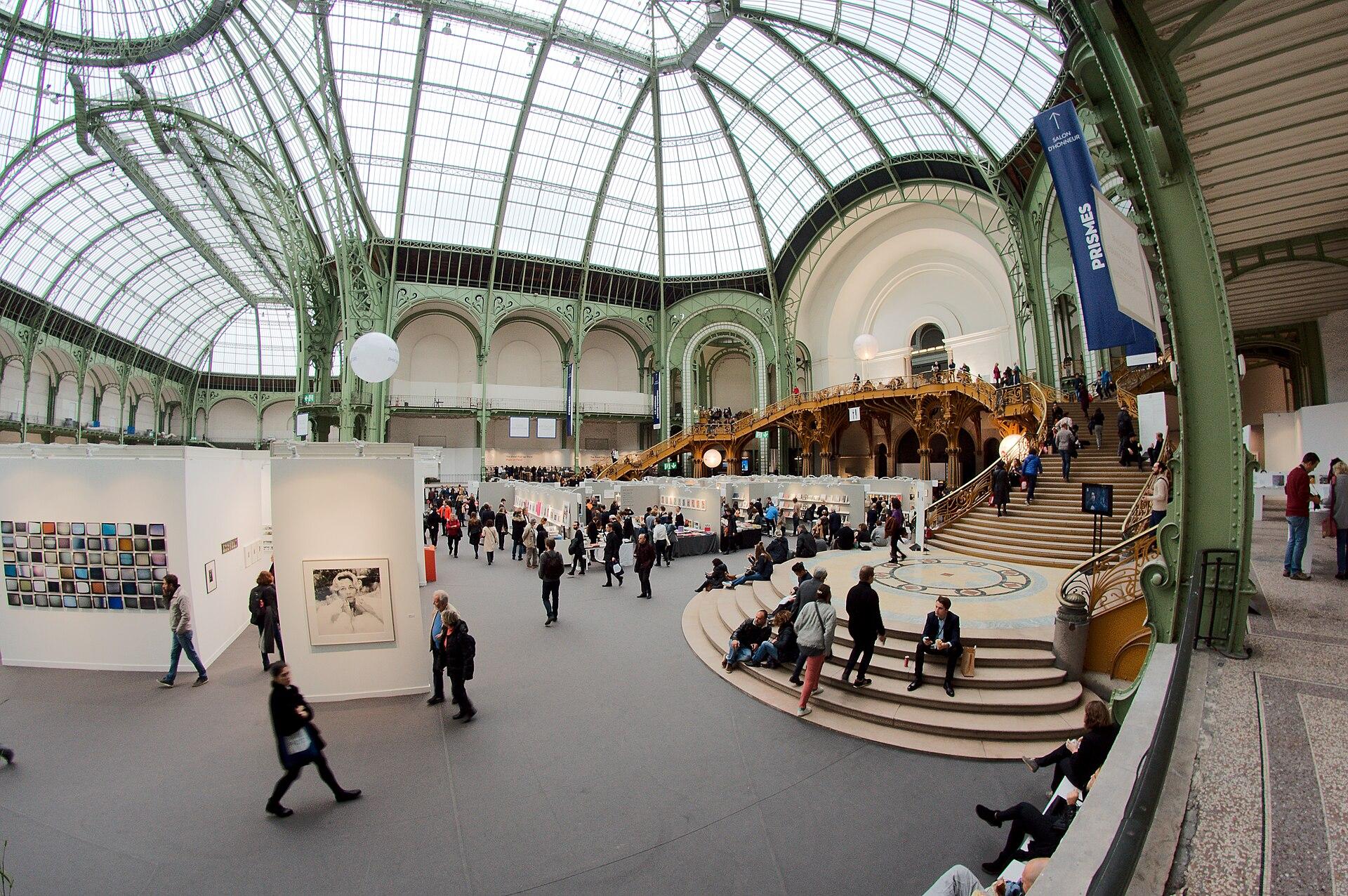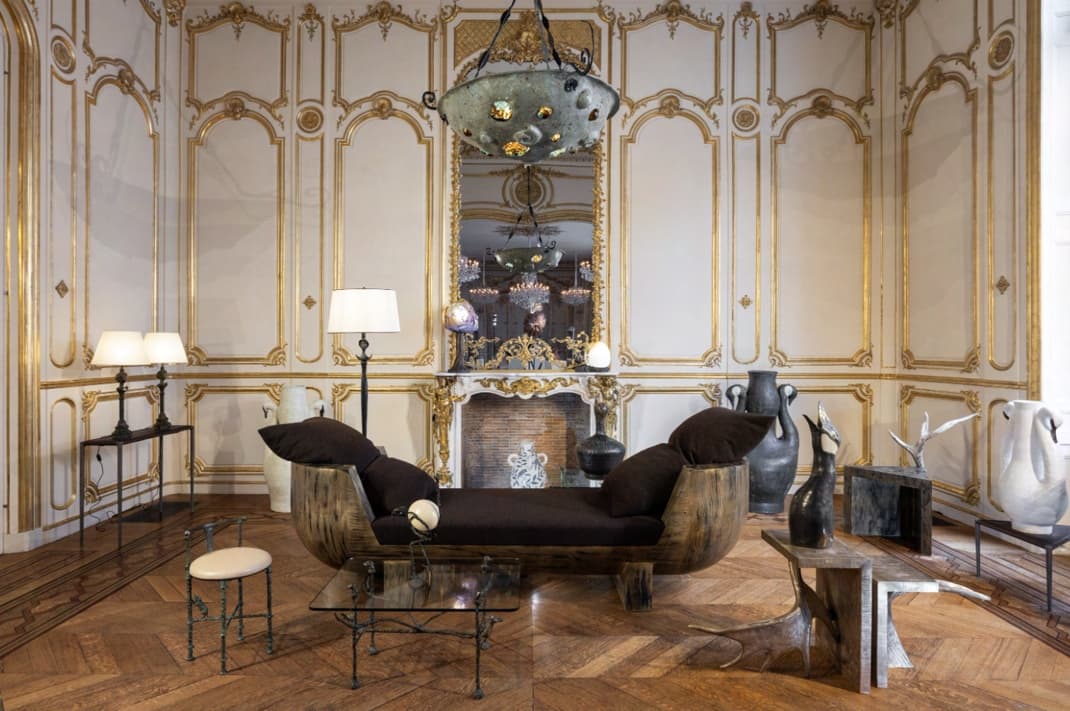
Last week we wrote that the early closure of Art Basel Paris 2026 took away exactly the half of the edition that was meant to face the city. The Grand Palais shut at 7pm on Friday, October 23, and the public weekend went with it, while the Tuesday Avant-Première that carried the sales was untouched.
That was true of the building. It was not entirely true of Paris. Art Basel had spread its Public Program, with Miu Miu as official partner, across nine sites, and several of them were never on the fair's clock. Looking back at the program now, with the help of the fair's own press images, the parts that outlived the closure are also the parts that made the strongest case for a fair being in a city at all.
Emin at the Trocadéro, until Sunday
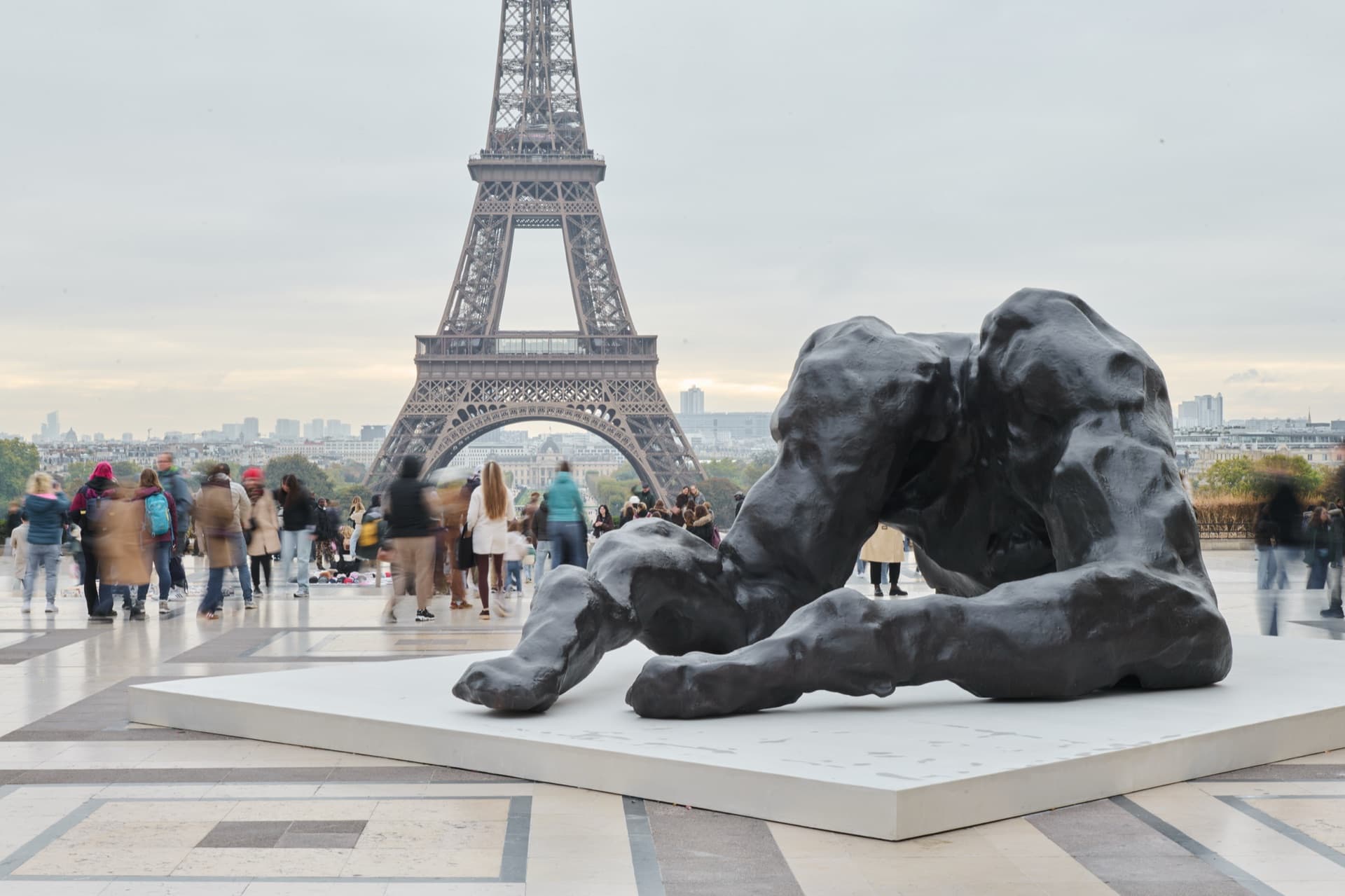
The first project Art Basel Paris has ever placed on the Parvis des Droits de l'Homme is also its best. Three monumental bronzes by Tracey Emin, presented by White Cube with the Cité de l'architecture et du patrimoine: I lay here for you (2018), I Followed You to the End (2024) and I Will Not Be Alone (2025). According to Art Basel, they are on view from October 14 to November 1, which means they stood before the fair opened and are still there on the weekend it lost.
The fair describes the sequence as a body moving "from prone to kneeling to seated, tracing a progression from surrender to insistent resilience." That is a fair summary, and the press image above shows why the siting works. The prone figure of I lay here for you lies on the esplanade with the Eiffel Tower directly behind it, among tourists who did not come for art. Emin's late bronzes can look overworked in a gallery, all thumbprint and lump. Out on the Trocadéro, at that scale, the roughness reads as weather and weight. A body lying down in the most photographed square in Paris is a better argument about vulnerability than any wall text.
There is a fair-floor echo, too. White Cube hung Emin's painting Waiting For A moment of You (2025) in its Grand Palais booth, a reclining female figure that Art Basel's dossier explicitly linked to the Trocadéro works. The painting was in the building that closed. The bronzes were in the square that stayed open.
Yanko among the casts, until January
The longest-running project is the quietest. At the Cité de l'architecture et du patrimoine, curated by Matthieu Poirier, Kennedy Yanko shows a new group of sculptures in the Galerie des moulages, the great hall of plaster casts of French monumental sculpture, on view from October 16, 2026 to January 3, 2027.
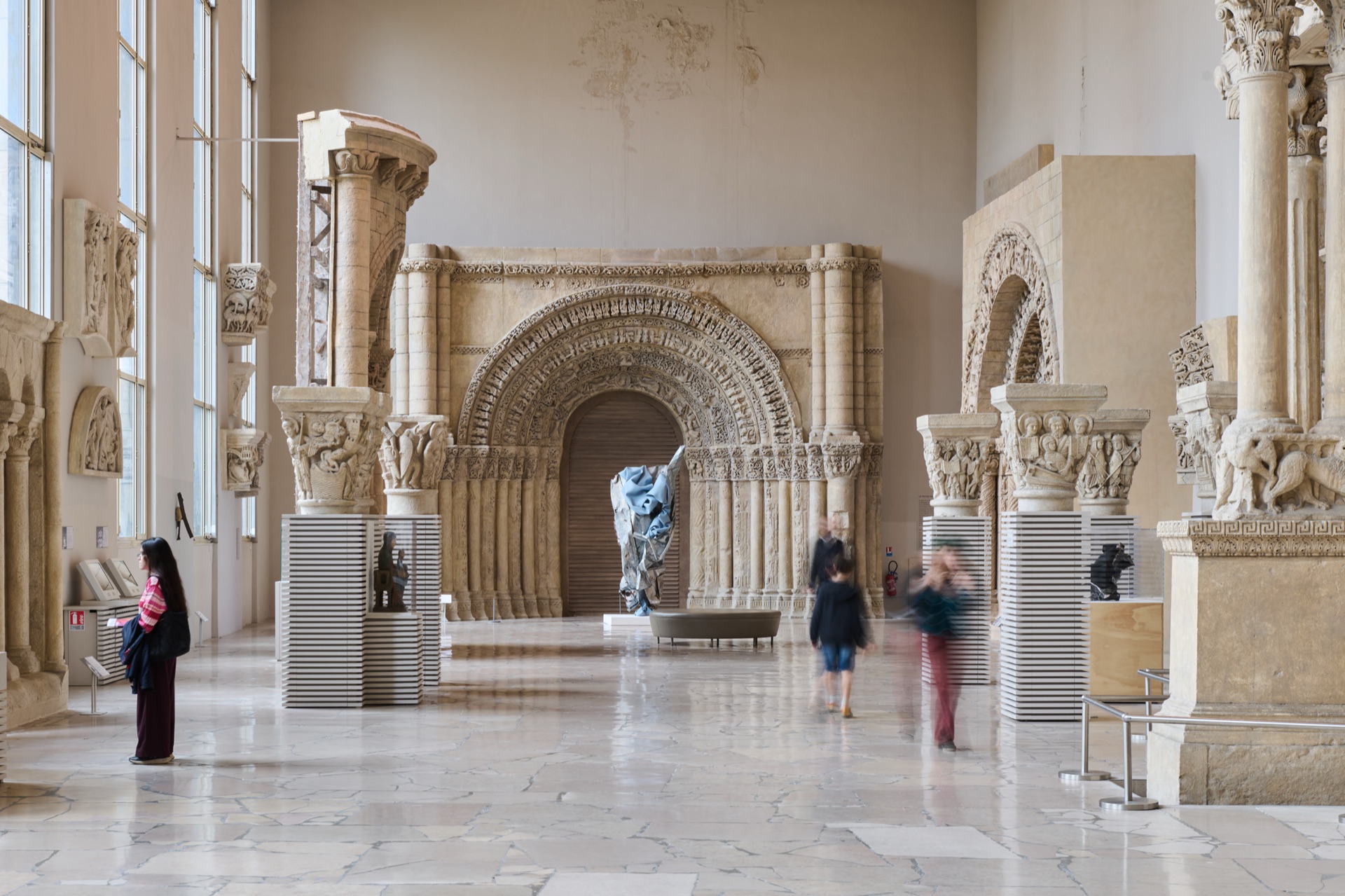
Yanko builds from salvaged metal wrapped in large, flexible "skins" of poured acrylic paint, dried and cut before they are fitted to the structure. Among Romanesque portals and Gothic capitals, the idea is clear enough: a contemporary sculptor's folds against the stone folds of the twelfth century. The risk with this kind of pairing is that the casts win, because they are enormous and because they are the reason anyone visits the room. In the press image they nearly do. Yanko's piece stands at the end of the hall like a visitor rather than a resident. That may be the point. It is still the project in the program most worth a detour this winter, precisely because it does not depend on a fair week to make sense.
The five-day projects that did not get five days
Elsewhere the program was built to run with the fair, and the closure cut it short. Cosima von Bonin's Dollys & Beaux (2026), presented by Petzel, Gaga and Neu, put her leather and velvet animals, a St Bernard, a bulldog, an octopus, a whale, hermit crabs, among the sculpture galleries of the Petit Palais, dressed in tartan and silk scarves. It was scheduled for October 20 to 25.
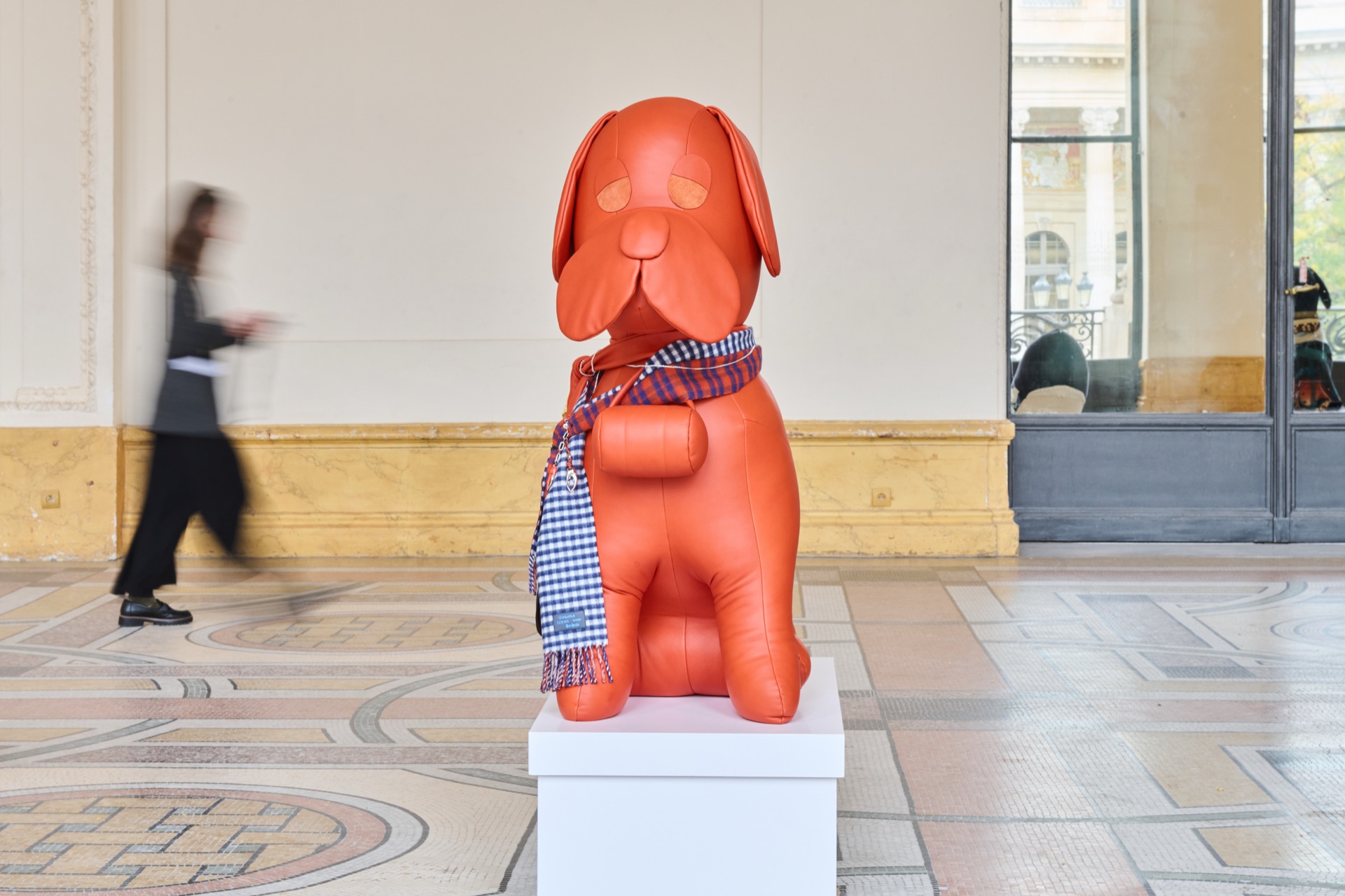
Von Bonin is the most intelligent joke in the program. A plush dog in a scarf, on a plinth, in the room where the city's museum keeps its nineteenth-century marbles, asks what a public sculpture is for without saying anything at all. It deserved its weekend crowd more than any other project here, because it needs people walking past it to work.
At the Chapelle des Petits-Augustins of the Beaux-Arts de Paris, Kutluğ Ataman's Küba (2004), presented by Niru Ratnam, ran forty screens of testimony from residents of an informal settlement on the edge of Istanbul. More than twenty years on, it remains one of the great works about listening, and it was the right thing to put in a chapel during a fair week. Alice Diop's Geste de Consolation for Miu Miu at the Palais d'Iéna, her first exhibition, was built around acts of consolation by Black women artists and ended on Simone Leigh's bronze Sentinel (Mami Wata). Both were scheduled to close on October 25. On Avenue Winston-Churchill, as we reported, Alicja Kwade's tower of stone spheres was taken down on the Friday.
GOD HATES SPACE, in a room inside the closed building
One project sat on the border. Art Basel and Live Nation, partnering for the first time, presented GOD HATES SPACE by GENER8ION, the duo of producer Surkin and filmmaker Romain Gavras, in the Rotonde d'Antin of the Grand Palais, a space brought into the fair's program for the first time. Free, on a twelve-metre double-sided screen, it was scheduled from October 22 to 25 and extends the world of the duo's album LOVE & TEARS, released in June.
As reported by Time Out Paris, GENER8ION arrived on the momentum of Storm, its video with Yung Lean, with more than 37 million views, restaged at the MTV Video Music Awards in September. The logic is plain: a free, music-led installation brings a public that would not buy a fair ticket into the Grand Palais by a side door. It is a smart way to widen a fair's audience. It is also the clearest sign of where Art Basel thinks that audience is, which is closer to a music video than to a painting. Because the Rotonde is inside the Grand Palais, we have not been able to confirm whether it reopened for the weekend after the closure, and we will not assume it did.
What the closure sorted
The early close was not designed as a test, but it worked as one. It separated the projects that were events, which needed the fair's five days and lost two of them, from the projects that were exhibitions, which had their own calendars and simply carried on. Emin and Yanko are the second kind. They are also the two projects that would be worth seeing in a week with no fair at all.
That is the lesson we would take into next year. A public program that is a ring of satellites around the Grand Palais is only as strong as the Grand Palais's weekend. A public program that places work in the city on the city's terms, for weeks rather than days, is harder to cancel. Emin's bronzes leave the Trocadéro tomorrow. Yanko's stay with the casts until January 3.
Public Program sites, works, galleries, curators and dates from Art Basel's Paris 2026 press dossier of September 21, 2026, including the link between Emin's booth painting and the Trocadéro bronzes. GOD HATES SPACE details from Art Basel and Live Nation's announcement of October 14, 2026. GENER8ION's Storm views and the MTV Video Music Awards restaging as reported by Time Out Paris (Smael Bouaici, October 12, 2026). Closure and the Kwade dismantling as reported by The Art Newspaper and Finestre sull'Arte. Press images courtesy of Art Basel. This is desk coverage: readings of the works are based on the organizer's descriptions and press images, not on a visit.