Pace Gallery Limited, the British company through which Pace runs its business outside the United States, published its 2025 accounts at Companies House on October 26. It lost about $5.4 million last year, after a loss of about $1.9 million in 2024, as reported by Artnet and Artlyst. Before tax the figure was $5.5 million. ARTnews, counting the international business slightly differently, put the loss at $5.6 million.
Mega-gallery accounts are usually read for the headline loss. The more useful number this year is on the other side of the ledger.
A company that shrank by a third in two years
Turnover was $65.9 million in 2025, down 2.6% on 2024 and 37% below 2023, when it stood at $104.9 million, as reported by Artlyst. The Art Newspaper's reading of the prior year's filing shows where the drop came from: sales to UK buyers fell from $10.7 million in 2023 to $4.1 million in 2024, and most of the turnover, some $48 million, was booked through subsidiaries rather than in London itself.
So the UK company is less a London gallery than a holding structure for Pace's non-American operations, with a London flagship attached. The flagship's local market has all but evaporated.
The directors put it down to "a continuation of the sector-wide contraction in global and UK art markets", as quoted by The Art Newspaper, and say the group began "cost saving measures" that did not stop "difficult market conditions". That is accurate as far as it goes. The Art Basel and UBS report found that global sales grew 4% in 2025. A business whose turnover falls while the aggregate market recovers is not only suffering the weather.
The balance sheet goes negative, and the parent steps in
The company ended 2025 with net liabilities of $2.9 million, against net assets of $2.5 million a year earlier, as reported by Artlyst. What it owes to The Pace Gallery LLC, the American parent, rose to $21.3 million from $19.2 million on the wider measure. The parent intends to convert that debt into shares by the end of 2026.
A Pace spokesperson told The Art Newspaper that the conversion "should not be interpreted as a loss or a liquidity issue for the UK business", and that the parent considers some of its investment "more appropriately reflected as equity rather than intercompany debt". ARTnews framed the same filing as the Glimchers pledging to keep the international business afloat.
Both readings are true, and that is the point. A debt-for-equity swap between a parent and its own subsidiary costs nobody any money. It moves a number from one column to another so that the British company stops showing negative equity, which matters to auditors, landlords and anyone extending credit in London. It is the right housekeeping. It is also an admission that the money sent to London over the past years is not coming back as repayment. As Artlyst notes, the 2024 accounts carried the same promise to convert. A year later the debt is larger.
What the filing does not show
The accounts cover the UK entity only. The American business and the Tokyo space are outside them, so they cannot tell us whether Pace as a whole is losing money, and we would not claim they do.
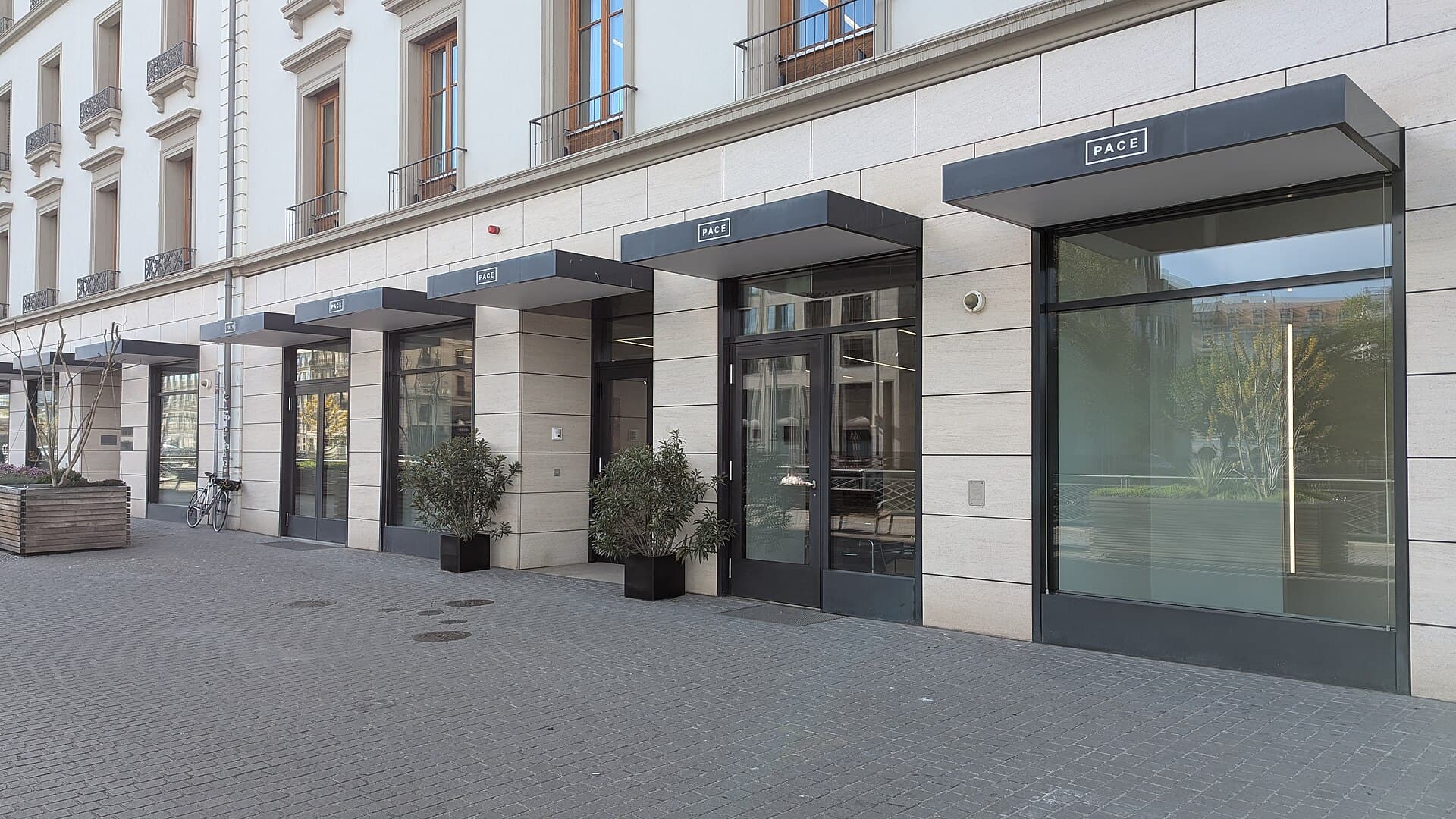
They do, however, line up with what the gallery has said in public. Marc Glimcher told The New York Times in May that Pace was "cutting 50 artists and 50 staff", as reported by The Art Newspaper, and the filing notes that the smaller roster "reduced the number of full-time support roles". The gallery paid $1 million in severance to one departing senior manager it declines to name. The Hong Kong space closed in October 2025. The lease on Hanover Square, a former Blain Southern building, went on the market in June, and Pace is looking for a smaller London space for 2027, as reported by Artlyst. The Art Newspaper mentions a planned move to nearby Grafton Street in Mayfair, with no news yet.
Our reading
Pace is doing what the middle of the market did earlier this year, only from the top and with a parent that can absorb the cost: fewer artists, fewer people, less floor. In July we argued that the mega-galleries expand while the middle contracts. Pace's London numbers are the first clear sign that the big four are not a single bloc. Scale protects a gallery from closing. It does not protect it from shrinking.
The open question is the London flagship itself. A Mayfair room that sold $4.1 million to British buyers in a year is a showroom for collectors who fly in, not a local business. Pace seems to have reached the same conclusion, and is now pricing the space accordingly.
What to watch
Three things. Whether the conversion is registered before the end of 2026, as promised twice now. What size the new London space turns out to be, and whether it opens in 2027 or slips. And the next round of UK filings from Pace's peers: if their British turnover fell by a similar share, this is a London story. If it did not, it is a Pace story.
2025 loss, pre-tax loss, turnover, net liabilities, debt to the parent and the planned conversion as reported by Artnet and Artlyst (October 28, 2026), from the accounts published on October 26, 2026. The $5.6 million figure and the Glimchers' support as reported by ARTnews. UK sales, subsidiary turnover, directors' statements, the spokesperson's quotes, severance, the Hong Kong closure, Glimcher's remarks to The New York Times and the Grafton Street plan as reported by Anna Brady in The Art Newspaper (October 27, 2026). Company record at Companies House. Global market growth from the Art Basel and UBS Art Market Report 2026. Interpretation is ours.