Dépendance in Brussels and Tiwani Contemporary in London both closed in June 2026, casualties of cost pressure that has been building across the middle of the gallery market for several years.
Both had real programs. Both had shown artists who went on to institutional recognition. Neither closed because nobody wanted what they were selling.
That is the part worth sitting with, because it breaks the story the trade usually tells itself about closures.
The arithmetic that does not work
A mid-size gallery has a cost base that behaves like a large gallery's and a revenue base that does not.
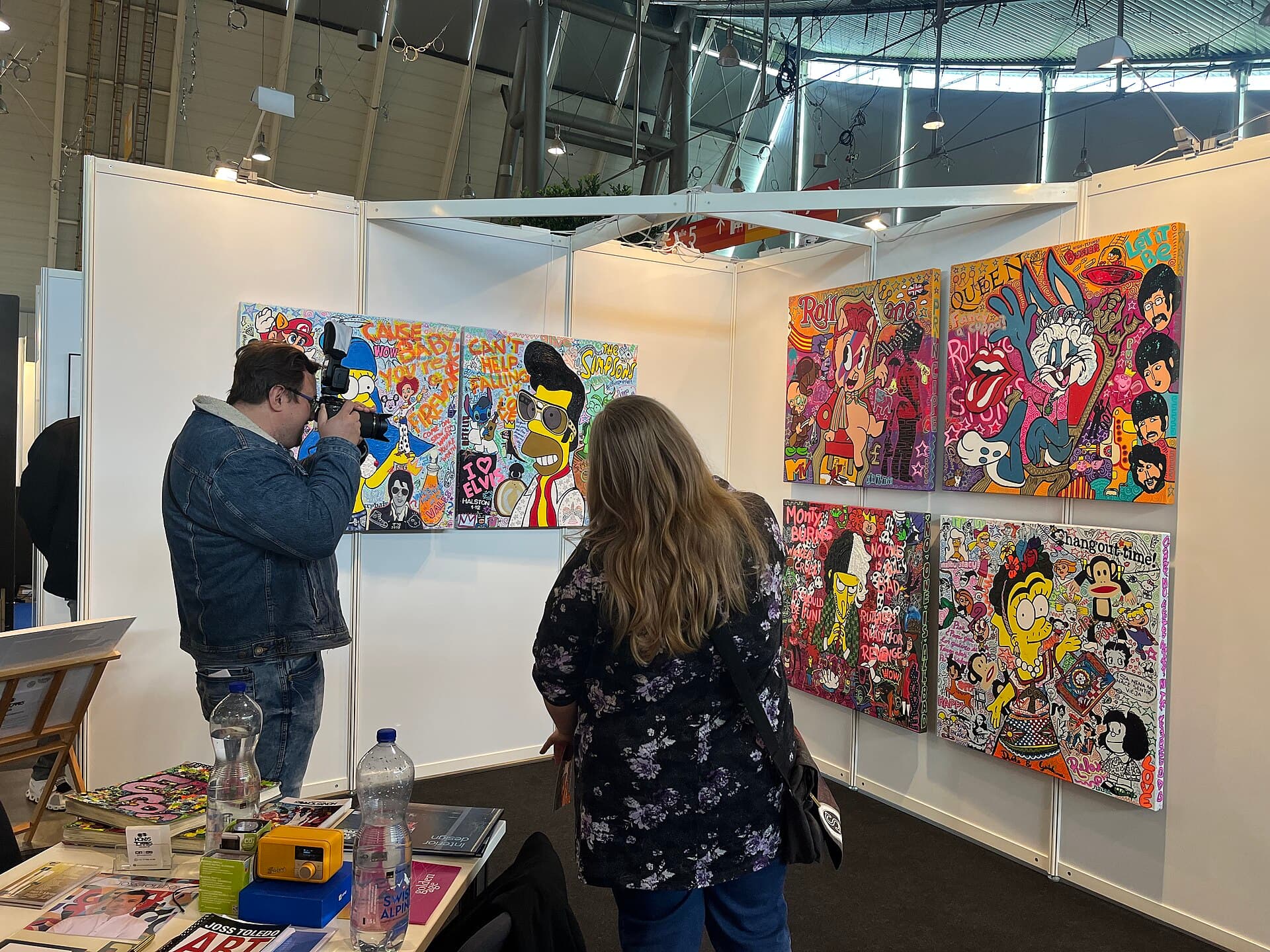
Rent in a city where collectors will visit. Staff who can write, install, ship and invoice. Insurance, storage, art handling, photography, a website that works. And then the fairs, which is where the structure breaks: booth fees, shipping, travel, accommodation, and per diems for a team, paid months in advance, for a stand at a fair that may or may not produce enough sales to cover it.
Meanwhile the gallery's revenue comes from work priced between roughly $5,000 and $80,000, sold at a margin split with the artist, in a market where the buyers with real budget have spent two years reallocating toward safer material.
There is no lever. You cannot raise a young artist's prices to cover a booth fee without damaging the artist. You cannot skip the fairs, because the fair is where the collectors are. You cannot scale down, because the fixed costs are what make you credible enough to be accepted at the fair in the first place.
The fairs have made this worse, quietly
The structural shift across 2025 and 2026 has been the concentration of fair business into ever narrower preview windows. Avant-Première in Paris. Basel Exclusive, with more than 190 main-sector galleries reserving significant works for the preview opening. Hong Kong, where nine of twelve seven-figure sales closed before the public days.
If the fair's decisive commercial hours are the preview, then the value of a stand depends almost entirely on whether the collectors admitted to that preview stop at yours. Galleries with blue-chip inventory can guarantee that traffic. Galleries showing an artist with two institutional shows and no auction record cannot, and they are paying comparable fixed costs to be in the same building.
The Art Newspaper's June assessment, that blue chip was getting a boost while edgier art remained in the doldrums, describes the same divergence from the auction side.
What the aggregate hides
The Art Basel and UBS report recorded global sales up 4% in 2025 to $59.6 billion, with the dealer sector up 2%.
A 2% rise across the dealer sector is entirely compatible with the top thirty galleries growing strongly and the next three hundred contracting. Aggregates cannot distinguish between a healthy sector and a consolidating one, which is why closures are the better instrument. They are binary, dated, and impossible to smooth.
The counter-evidence, and it is real
Against all this, the emerging end of December 2025 held better than expected. At NADA and Untitled in Miami, dealers reported steady selling below $20,000, and NADA's exhibitor list carried 47 first-time participants.
So the picture is not uniform collapse. It is a squeeze at a specific band: galleries established enough to carry a full cost base, but not established enough to trade blue-chip inventory. Too big for the incubator tier, too small for the preview economy.
That band is where artists' careers are built between a first show and a museum survey. If it keeps thinning, the effect will not show up in the aggregate for years, and by then the artists who would have been shown there will simply not have been.
Closures as reported in contemporaneous trade coverage, including Artnet News. Cost structure described here is general to the mid-size gallery model and is not attributed to either gallery's specific accounts.