Fair coverage tends to be written one fair at a time, which makes it very hard to see the shape of the circuit. Set the 2026 counts next to each other and a pattern appears that no individual sales report contains.
| Fair | Edition | Scale reported |
|---|---|---|
| Art Basel, Basel | June 2026 | 290 galleries, 43 countries, 90,000 visitors |
| Art Basel Miami Beach | December 2025 | 283 galleries, 43 countries, 80,000+ visitors |
| Art Basel Hong Kong | March 2026 | 240 galleries, 41 countries, 91,500 visitors |
| TEFAF Maastricht | March 2026 | 276 dealers, 24 countries, 50,000+ visitors |
| Frieze London and Masters | October 2025 | 280+ exhibitors, 45+ countries |
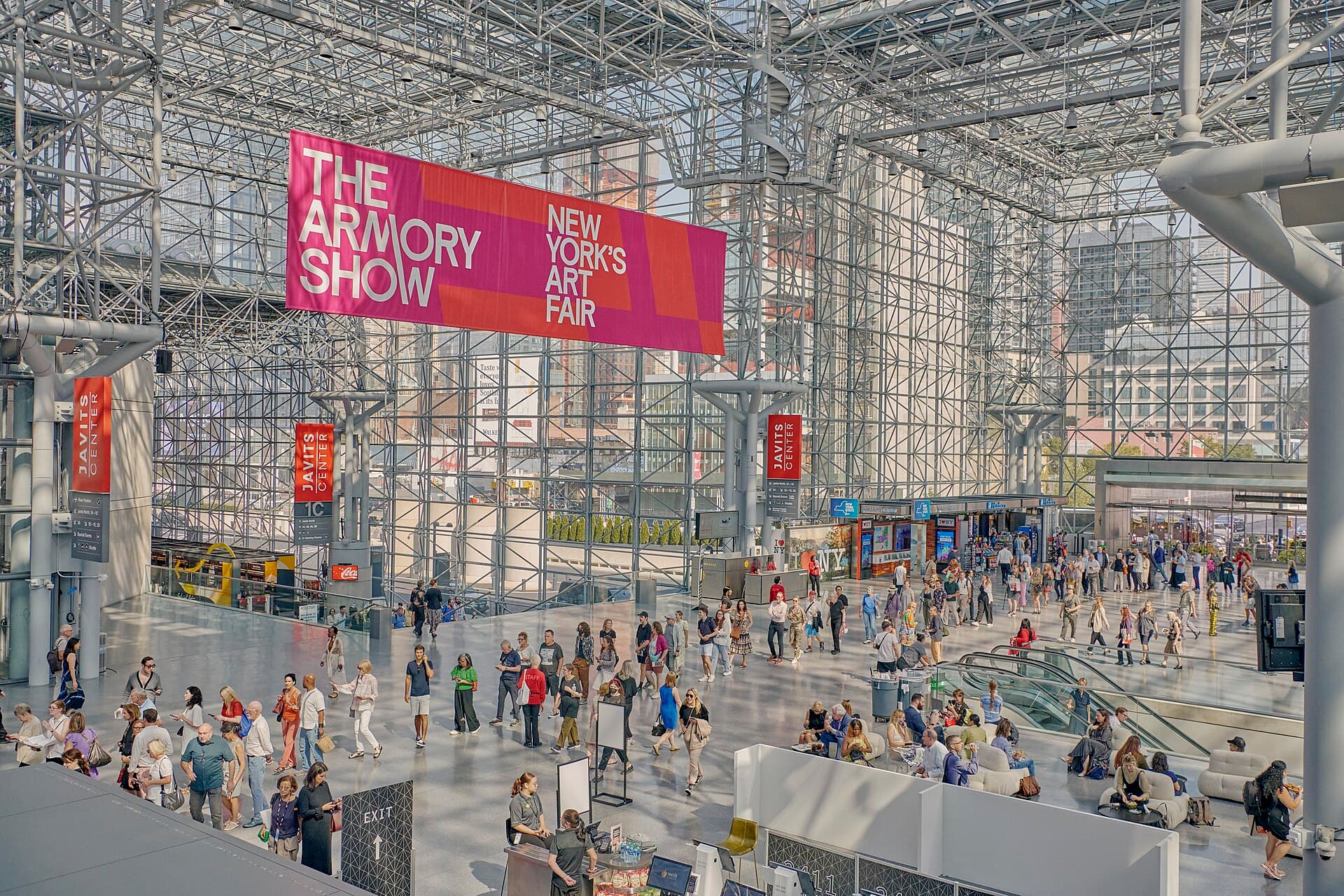
| The Armory Show | September 2025 | 230+ exhibitors, 35 countries |
| Frieze New York | May 2026 | 25,000 visitors from 75 countries |
| Art Basel Qatar | February 2026 | 87 galleries, 31 countries, 17,000+ visitors |
| Frieze Los Angeles | February 2026 | 100 galleries |
The circuit is not growing
Nothing in that table is materially larger than its equivalent three or four years ago, and several entries are smaller. The two genuinely new products of the past year, Art Basel Qatar at 87 galleries and Frieze Los Angeles at 100, are the smallest on the list by design.
That is not a sign of weakness. It is what a mature industry looks like when it stops buying growth with square metres.
Where the growth has actually come from is access engineering. Avant-Première in Paris. Basel Exclusive, with more than 190 galleries holding significant works for the preview opening. A Hong Kong edition that closed nine of twelve seven-figure sales before the public arrived. Same floor, same galleries, more value extracted per visitor by tiering who gets to see what and when.
Frieze Los Angeles at 100 galleries
Frieze's seventh West Coast edition ran at Santa Monica Airport with a tightened lineup of 100 galleries.
A hundred galleries is a deliberate size. It is small enough to walk properly in a day, small enough that every exhibitor is visible, and small enough that the fair can be selective without leaving gaps. Los Angeles has a deep artist population, a growing collector base, and a chronic problem convincing international dealers that the trip pays. A tight fair that sells out is a better answer to that problem than a large one that half-fills.
Frieze New York's visitor profile
Frieze New York, in its fifteenth year at The Shed in Hudson Yards, closed with 25,000 visitors from 75 countries and a sales report suggesting health across multiple price points. TEFAF New York marked its tenth anniversary in the city in the same period.
25,000 is a fraction of Basel's 90,000, and the comparison is meaningless without the venue. The Shed is a building, not a convention centre, and Frieze's move there traded floor area for a permanent, well-located, architecturally serious home. The relevant metric for a fair of that size is not headcount but whether sales hold across price bands, which is what was reported.
What to take into December
The circuit has settled into roughly 240 to 290 galleries for a flagship, 100 to 160 for a satellite or a regional edition, and 87 for an experiment. Nobody is trying to build a 400-gallery fair.
So when Art Basel Miami Beach opens on December 4, the gallery count will not be the story. The story will be how much of the business closes on December 2 and 3, before most of those counted visitors get through the door.
All figures as announced by the respective organizers, compiled from their published closing reports. Counts are not audited and definitions of visitor differ between fairs, which is precisely why they should be read as a pattern rather than a league table.